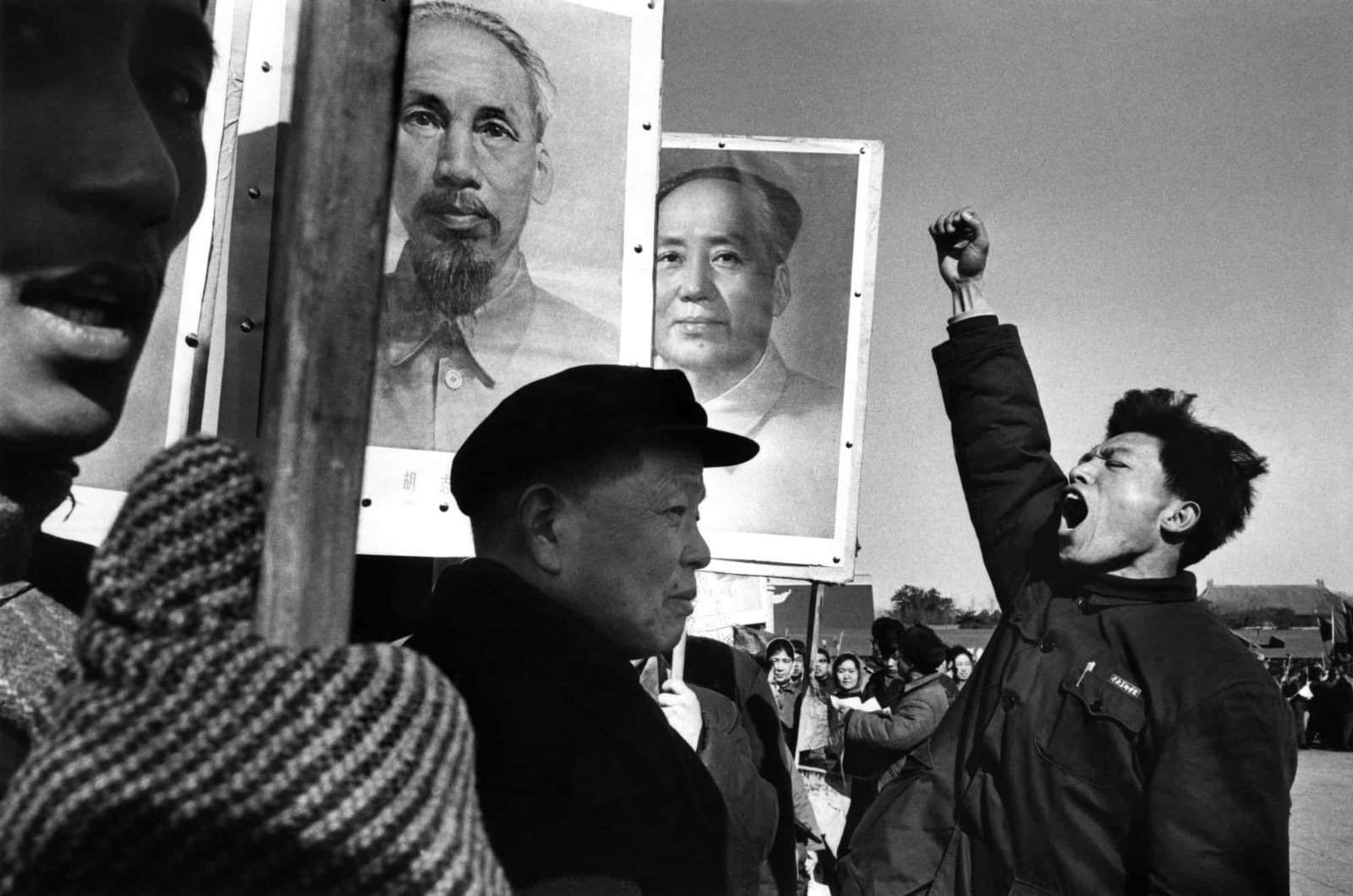
ONURCAN ÜLKER & SİNAN JABBAN: First of all, thank you very much for agreeing to this interview. In another interview conducted about a decade ago, you mentioned how “some people think in today’s China it is not capitalists but revisionists who are in power,” but that in fact “China is an industrialized capitalist country where the capitalist class is in power.” Could you tell us a bit more about why this distinction matters?
FRED ENGST: In response to this question, I would like to refer to Lenin’s State and Revolution. In this work, Lenin convincingly demonstrates that the existence of the state reveals irreconcilable contradictions among social classes. In a capitalist society, there are essentially two main antagonistic classes: the working class and the capitalist class. The capitalist class owns and operates the means of production, while the working class has no say in how they are run. In other words, they are merely wage earners.
Let’s use the Soviet Union as an example: Although it had a planned economy prior to its collapse, it was only superficial because the Soviet working class had been excluded from power. The working class’s inability to influence how society was run demonstrates this. The true nature of the economy was hidden, yet it was still a planned economy. But whose benefit was it for? The fundamental questions remained: What to produce, where to produce it, why produce it, and how to produce it? Basically, who dictates socialized production? In socialized mass production, the contradiction between managers and workers comes down to whether people control the means of production. They can do so in the name of the state or the Party, but those being managed don’t have much of a say in how things are run.
Alternatively, you could have a situation where the working class is in control and delegates some people to management to coordinate mass production under the supervision of the working class. So basically, under the dictatorship of the proletariat, there is still a contradiction between the leadership, or the vanguard party, and the mass supervision. Without mass supervision and without the workers having a say in how it’s run, you don’t really have a working-class state.

Therefore, any attempt to create a “third class,” such as a bureaucratic or intellectual class that is above both the working class and capitalists, is not Marxist. It’s a bourgeois social studies scholar’s way of looking at things: analyzing surface phenomena rather than the essence. Essentially, class analysis is unavoidable in society. Ultimately, it comes down to which class controls the state and the guns. In State and Revolution, Lenin discusses the oppressive state apparatus and who it targets. Who are they afraid of? Who are they protecting?
I see many people trying to be wishy-washy by using terms such as “post-revolutionary society,” while avoiding any mention of class, acting as if classes don’t exist. They’re avoiding the question of which class is in power. They’re avoiding the question of who controls the state apparatus, the army, and the police. What kind of social order are they maintaining? That is precisely the crux of the matter. That’s why we can’t be wishy-washy about which class is in power. When the capitalist class is in power, we must call it what it is.
So, if we call China a capitalist country today, what made it “socialist” in the past? As you may have noticed, broadly speaking, some people on the “left” claim that the Chinese Revolution never became socialist on account of its “class character.” Despite being one of the most mass-based revolutions in human history, it was, at best, a petty bourgeois national revolution. What evidence can you present to counter this argument?
Well, I also met some intellectuals and others in the West who claimed that China was not really socialist and was never run by the working class. I mean, that’s a common accusation. More often than not, their evidence was quite ridiculous. For instance, they claimed that most leaders of the Chinese Communist Party came from the landlord or capitalist classes. They said these leaders were not genuine socialists or that the socialism they built did not align with their vision of “socialism.”
However, one could argue that the British Labour Party is part of the working class, at least some of the time, based solely on the composition of its leadership. In that case, Britain under Labour rule would not be an imperialist country but rather a “degenerate workers’ state!”
On the contrary, I believe that under Mao, the Communist Party proved itself to be the vanguard of the working class. The evidence lies in their actions after Land Reform. The 1949 Revolution overthrew feudalism and imperialism in China. These can be considered forms of national liberation and national revolution. However, the Party soon demonstrated that it was pursuing not only a national revolution, but also a revolution led by the working class. They achieved this by doing two things: First, they fought against U.S. imperialism in Korea, demonstrating their proletarian internationalist character. Second, they enthusiastically promoted collectivization immediately following Land Reform. Peasants will not spontaneously collectivize. Evidently, it is not a cause that the petty bourgeoisie will advocate for.
Instead of integrating these cooperatives into a nationwide economic plan, the Communist Party could have pushed only for small co-ops. This approach would have been considered “petty bourgeois,” and justifiably so. After Land Reform, however, they gradually began collectivizing agriculture. By 1956, over 90% of agriculture had been collectivized. The working class supported this effort. Throughout this process, the working class gradually moved toward socialism in alliance with the peasantry, particularly the poor and middle peasants. This policy, in addition to the resistance against U.S. imperialism during the Korean War, clearly demonstrates the Party’s class character.
If you need more evidence, it’s also available. The most compelling evidence that the working class was in control in China is the violent factional conflicts that occurred during the Cultural Revolution. The country was on the verge of civil war!
So, let’s think about it for a second: Throughout history, civil wars have sometimes been fought within the ruling classes. One example is the U.S. Civil War between the North and South. This civil war was fought between different factions of the ruling class who had different ideas about how to run the country. There are also civil wars in which the ruling class fights against the people. Consider the Spanish and Chinese civil wars, for example. In both cases, the ruling class fought against the people. In China, the Nationalist Party (Guomindang [GMD]), fought the Communist Party-led Red Army, the People’s Liberation Army (PLA). In any case, at least one side in a civil war must be the ruling class. Can a civil war be fought without the ruling class? No!
During the Cultural Revolution, militant organizations formed among factory workers. These groups attacked each other, escalating into violent conflicts involving weapons. So, which side represented the ruling class? In fact, both sides were part of the ruling class. Therefore, the conflict was detrimental. One could argue that this conflict ultimately buried the Cultural Revolution. Or, one could say it was the last straw. Well, these arguments make perfect sense. However, despite how terrible these conflicts were, they demonstrate that the working class was in power in China.
They’re avoiding the question of who controls the state apparatus, the army, and the police. What kind of social order are they maintaining? When the capitalist class is in power, we must call it what it is.
In that context, how would you respond to the criticism that Mao Zedong was a “class collaborationist”? Did the alliance formed during the Chinese Revolution between the working class and others, including the national bourgeoisie, truly represent “class collaboration”?
Those who make this claim must go back and examine what Lenin did. He believed in firm principles but also flexible tactics. Essentially, you must form a united front. Only then can you defeat your main enemy.
Before socialism, there were three basic contradictions in the world: One was between capitalists and the working class. This was class conflict, or the “fundamental contradiction.” The second was the contradiction among the imperialist powers. This was typified by World War I and, later, part of World War II. The third contradiction was between the imperialist powers and the oppressed nations, as seen in African, Latin American, and Asian countries. These were the three basic contradictions. The October Revolution, of course, gave rise to a fourth: the working-class state versus the imperialist powers.
Now, we need to analyze the “principal contradiction” of each historical stage in each country. I mean, we need a concrete analysis of concrete conditions. During the war before 1949, the principal contradiction in China was between the imperialists and the Chinese nation. This was especially true during World War II, when China was invaded by Japan. When the principal contradiction was between imperialism and national liberation, anyone who opposed your main enemy could potentially join a united front with you as an ally. And this included national capitalists as well. After World War II, the primary issue in China was achieving national independence. Although Japan had been defeated, China was still controlled by comprador capitalists backed by the U.S. and other imperialist powers. Thus, China remained a semi-feudal, semi-colonial state. Anyone who opposed feudalism and, this time, U.S. imperialism could potentially be an ally in a united front. After 1949, the situation changed once again, and as Mao observed, the contradiction between labor and capital became the principal contradiction in China.
Anyway… If you interpret a Communist Party’s adoption of a “united front” policy as meaning that it lacks a “working-class character,” then you are what Lenin called left-wing infantiles. I advise those people to go back and read Lenin’s writings about left-wing infantility. Basically, we need to identify the principal contradiction and unite all the forces that can help fight it, as well as the enemy of that contradiction. That’s how we analyze a situation. If you want to be a “purist,” you will lose. It’s as simple as that.
During the McCarthy period in the U.S., they said that “a good communist is a dead communist.” They did not like any living communists. Obviously, if you go against everyone who is not working class without making any distinctions, you will be wiped out immediately. In other words, you will become a “dead communist.” Do you really think that won’t please your enemies?
So, that’s the difference between serious revolutionaries and those who merely pay lip service to the revolution. Serious revolutionaries analyze concrete conditions of each stage and think about how to succeed. They strive to unite all forces that can contribute to the struggle against the main enemy.
You mentioned the violent factional conflicts among workers during the Cultural Revolution, which escalated to the brink of civil war in some places —for instance, Wuhan and Guangxi. Could we say that the Chinese revolutionaries also sometimes overlooked the importance of “concrete analysis of concrete conditions”? Or were there other aspects to these factional conflicts beyond the divisions within the working class?
That raises an important question. When discussing the Cultural Revolution, it is important to distinguish the internal conflicts of the working class from the conflicts waged against it by “capitalist roaders” seeking to maintain their power, as well as the petty bourgeois factional in-fighting. After all, this was a historical juncture marked by the intertwining of highly complex struggles between various class forces.
First, it’s important to note that the Cultural Revolution was all about class struggle under socialism. It was an ongoing revolution under the dictatorship of the proletariat. But what does that mean beyond phrases and slogans? In retrospect, now that we have seen its evolution in its entirety, we have a clearer understanding of all the changes. Essentially, it comes down to whether you’re defending ownership by the entire population or a small clique. The essence of a dictatorship of the proletariat is defending ownership by the people as a whole.
As I mentioned, the fact that the working class was directly involved in these conflicts shows that they were in power. Nevertheless, these conflicts denied a large part of the working class the right to speak and participate in decision-making processes. Using violence to strip a group of workers of their right to participate means that one is not defending ownership by the people as a whole. Class analysis shows us that when the petty bourgeoisie engage in factional in-fighting, they are not fighting for the interests of the working class as a whole. They cared more about winning an argument and being proven right in a small circle than winning the revolution.
Class analysis reveals contradictions in society and shows how people’s opinions, approaches, and ideas are related to class struggle. And taking this approach shows that these factional conflicts played a key role in the ultimate defeat of the Cultural Revolution. This is an irony of history.
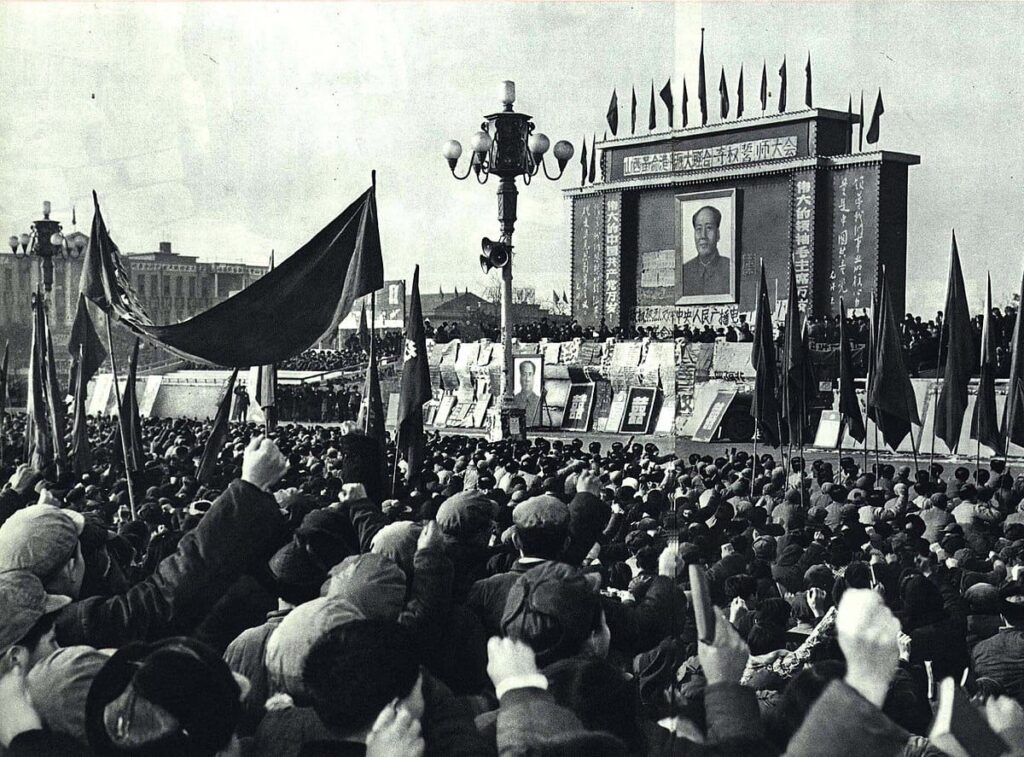
So, as you mentioned, the Cultural Revolution was ultimately defeated. But how did the masses interpret the capitalist roaders’ victory in 1976? And how did they make sense of “market socialism” and the broader capitalist reforms in the years that followed?
How did the masses make sense of the capitalist roaders’ victory in 1976? Well, they didn’t! As the Chinese phrase goes: 温水煮青蛙 wen shui zhu qingwa. It means you put a frog in a pot of warm water, slowly increase the temperature, and eventually the frog finds it too hot, but it’s too late to jump out.
So, basically, the capitalist roaders weren’t stupid enough to say that they wanted to restore capitalism. Take a look at the October 1976 issues of Chinese newspapers, for example. What was the accusation against the “Gang of Four”? They were accused of sabotaging the Cultural Revolution!
Those who seized power took a slow, step-by-step, systematic approach to disguise their true intentions. I remember, back in 1979 when I was in China, they were talking about decollectivization. However, they were only referring to poorly performing collectives in remote, mountainous areas. “There’s no sense in keeping them in the collective,” they said. They started chipping away at the easiest place, and then it became a slow, gradual, step-by-step process. Finally, they said, “If you don’t decollectivize, we will remove you from office.” Any cadres and people in leadership positions in the commune or brigade were forced to carry out decollectivization. Very, very few, perhaps 0.1% or 0.001%, were able to hold onto their collectives.
That’s what they did. I mean, their arguments sounded reasonable at first. But then, they pushed the envelope to see how much resistance there was. They found all the ways they could manipulate the working class. They had that power because they controlled the guns, right? They controlled the state. If you wanted to hold onto your collectives, they would use bank loans and state power to render you inoperable. It’s just the same way as during the collectivization process when those diehards who held onto their land had a hard time sustaining themselves. That’s where the power of the state comes in. Backed by the police and the army, the state enforces the dictatorship of the ruling class. Either the bourgeoisie or the working class… They did this step by step. They also offered many incentives. For example, they gave bonuses to workers, raises to managers, and money back to capitalists. I remember going back to the woodworking factory in Beijing, where I used to work, in 1977. My old colleagues were so happy because they all received bonuses!
Then, in 1979, I went there, and they weren’t so happy anymore. They were still happy, just not as happy as before. By the 1980s, they started grumbling. One of my colleagues said, “God, we need a new Cultural Revolution to wipe out this corruption!” They complained about the corruption, and they found out that the 5-yuan or 10-yuan bonuses they received were no comparison to the 500-yuan bonuses the factory managers received. They also found out that the management, not the workers, decided who deserved the bonuses. Basically, they soon realized that the bonus system stripped their ability to speak up against the leadership. If you spoke up, they said, “Okay, you have the right to criticize. But I have the right to not give you bonuses.” It’s just like a capitalist society: In the factory, you have the right to speak, and the boss has the right to fire you. Very soon, the workers found that they were no longer the masters of society, but by the time they realized it, it was too late. The frog was in the pot and the water was too hot. But it couldn’t jump out anymore!
As for your question about “market socialism”: Well, in the ’80s, I was all into market socialism, too. Then, I realized it’s a contradiction in terms. A market economy is a capitalist economy, for it is based on commodity production. As we all know from experience, in a market, neither buyers nor sellers take the interests of the working class or the people as a whole into consideration. A market is all about the interests of individual capitalists or small groups. “Market socialism” is a term used to avoid laissez-faire capitalism. Rather, it’s state-regulated capitalism. Here, the definition of “socialism” also changes from what we know of in terms of Marxism or Leninism.
Marx and Engels wrote The Communist Manifesto instead of The Socialist Manifesto to distinguish between a working class in power versus a capitalist class in power. For advocates of “market socialism,” socialism is merely state intervention in the economy. The degree of state intervention can vary widely, ranging from nearly laissez-faire, as in the U.S., to highly regulated economies, as in France. Before Thatcher, England also had many state-owned enterprises. However, equating state ownership with socialism leads to revisionism. Revisionists believe in peacefully transforming to socialism through electoral politics, which results in increased state ownership and control of the economy. They replace the dictatorship of the proletariat with state ownership and control —an idea that is not new. If socialism means only state control, then capitalists are fine with that. They can accept state-run postal services under capitalism, but that doesn’t mean they’re moving toward communism!
All this talk about “market socialism” is a fool’s errand because it fails to use class analysis to understand the nature of the market. By definition, a market economy cannot be controlled by the working class. A market economy is a capitalist system of commodity production. I’m not saying that a working class in control won’t have a market, but that’s not a market economy. We must distinguish between the existence of a market and a market economy. A market economy is an economic system in which producers, sellers, and buyers operate based on what is best for themselves.
Under socialism, the guiding principle is “from each according to their ability, to each according to their work,” rather than “from each according to their ability, to each according to their need.” In other words, before reaching the higher stage of communism, there must be a system in place to distribute goods based on how valuable a person’s work is. People will then receive a salary based on how hard they work. They will then go to the market to purchase whatever they need. Essentially, the production of goods such as bicycles, watches, shoes, and clothing belongs to the whole people, belongs to the whole country. Workers then go to the store and purchase these items for personal consumption rather than for production. Once you purchase them, they become your property. Thus, ownership of every product transforms from the ownership of the whole people through the market to individual ownership. However, the means of production themselves do not fall into private hands. While there is certainly a market here, it is not a market economy.
In a market economy, however, products are owned by capitalist groups, who then sell them to other capitalist groups or individuals. Not only products, but also means of production such as cranes and trains, are bought and sold on the market. Basically, ownership is transferred from one private entity to another. Of course, you could argue that state-run enterprises in France, Germany, or England belong to the state, but the question is, who controls the state? We cannot equate state ownership with ownership by the whole people. Who controls the state? We need to make it very clear who controls the state, and then we need to find out which class runs the economy. The army and police defend whose rights? The guns are pointing at whom, and they are defending whom? This determines which class runs the state. The product from the state-owned industry belongs to a certain class, either capitalists or the working class. “Market socialism” avoids analyzing the nature of the state and which class runs the economy.
Very soon, the workers found that they were no longer the masters of society, but by the time they realized it, it was too late. The frog was in the pot and the water was too hot. But it couldn’t jump out anymore!
Sorry to interrupt, but let’s quickly return to the topic of China. Some people on the “left,” promoters of the so-called “Actually Existing Socialism” (AES), argue that the market is merely a neutral means, as Deng Xiaoping himself claimed, and that China is utilizing it only for now. They claim that China is still socialist and that the “class character” of the Chinese state has not changed since the Mao era. The means and methods may differ, but as long as the Communist Party remains in power, the ultimate aim will not change. What are your thoughts on this line of argument?
Ultimately, it all comes down to what we just said: which class controls the state. If you think the market is neutral, you’re fooling yourself. The marketplace enforces contracts to protect the interests of buyers and sellers. Essentially, you have to go back to State and Revolution. It made that clear. You can’t skirt around this. You can’t escape it. You can’t avoid it. Market operations are based on which class is served. As I said earlier, socialism doesn’t mean we have no markets. It’s about how workers earn wages. Then, they buy goods from industries owned by the whole people. In essence, state-owned industries are working-class and state-owned.
From an organizational point of view, capitalist state-owned industries appear similar. However, the key difference lies in who has the right to speak up and challenge authority. Basically, the state defends a specific class. If you view the market as a neutral force, then you’re ignoring the class society that the police and army defend. In that transaction, they defend the interests of the host. For example, in a market economy, when managers dock workers’ pay, the workers go on strike. The police side with the managers, not the workers. From a neoliberal point of view, workers are individuals who are protected by freedom and can therefore go against capitalists. However, when they organize as a union, it’s considered a “monopoly.” Therefore, the market is not “neutral.” As Marx made clear in Capital, a class relationship lies behind commodity exchange.
Therefore, if you claim that the market is neutral, you’re either deceiving yourself or attempting to deceive the working class.
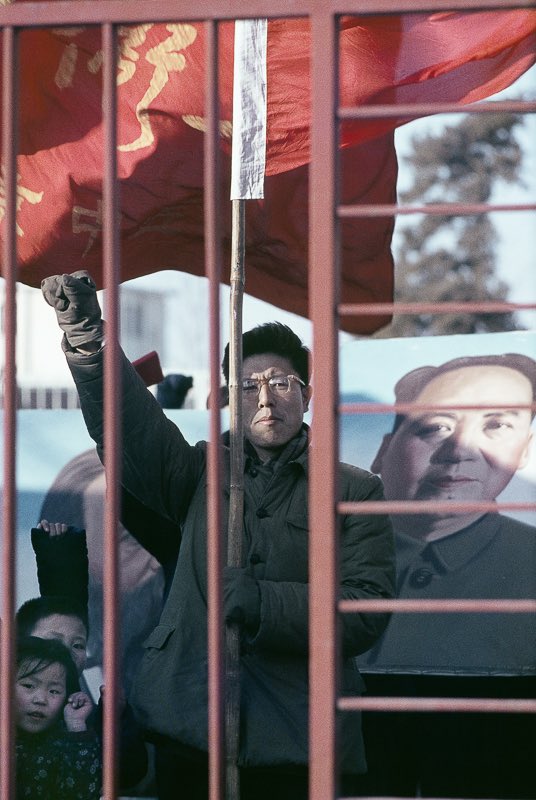
Let’s be more straightforward: If the key issue is which class controls the state apparatus, then which class controls the state in today’s China? Is it still accurate to use the term “bureaucratic capitalist class,” or are we witnessing a new kind of capitalism in China that is even more convenient?
Of course, there have been different brands of capitalism throughout history. Basically, the relationship of production in capitalism has shifted from free competition to monopoly, oligopoly, and imperialism. There’s laissez-faire capitalism, state intervention capitalism, and so on. These are all different forms of capitalism, but the DNA is the same regardless of the form.
So, basically, I like to use the metaphor that maggots crawl into feces and eventually become flies. Some people compare the flies to the maggots and say they look like different animals, but they’re just in different stages of development. They have the same DNA. Capitalism is the same way. We have to analyze not only the form of how socialized mass production is organized, but also its DNA. Are they the same? The DNA of capitalism is the accumulation of capital. If the driving force is to accumulate capital for expansion, then anything can be called capitalism.
What we see in China today is that we have the largest single monopoly capital conglomerate in the world. Why do I say it’s the “largest”? Look at the Fortune 500. The largest corporations in the world are listed there. And when you look at the Chinese companies on that list, you see that one monopoly conglomerate controls more than 20% of the world’s largest corporations. For example, they have many banks, airlines, and cell phone companies competing with each other. However, this competition is managed.
Of course, many companies in the West also operate within large corporate groups. Consider General Motors, for example. The company owns Cadillac, Buick, and Chevrolet, among other brands. Each brand has a different consumer base. But what if all these brands competed in the same marketplace for the same customers? This is why it’s called controlled competition. However, the situation in China goes well beyond that. In the West, competing monopoly capital groups control the economy and the government. Financial and industrial capitalists, for example, compete with each other. Consider General Motors versus Ford, for instance, or other companies worldwide. In China, though, these banks and industries are all under one umbrella: the state. The central government appoints the management of these corporations. These corporations must operate in a way that fulfills national objectives. For example, the development of renewable energy was rapid, such as electric cars, solar panels and wind power dominating the world, all because the state-capital conglomerate recognized its importance to the Chinese economy and nurtured, promoted, and organized it accordingly.
All right, so basically, they can identify vulnerable sectors and allocate money and resources to them. They had a project called “Made in China 2025,” which they introduced in 2015. They set goals and relentlessly pursued them. The overwhelming majority of those goals have been fulfilled. This would not have been possible in Western capitalism, where different monopoly capital groups compete with each other for markets and resources. For example, the U.S. can’t even build a bullet train! When Trump launched the trade war, he tried to cut off technology and nearly destroyed Huawei. Do you see what happened? China has recovered in chip manufacturing and is excelling in software development. You can see that DeepSeek is shaking up the entire world. What makes all of this possible? China has a party-state conglomerate. This conglomerate controls the party, the state, commerce, finance, and industry. It is the world’s most powerful single monopoly conglomerate.
So, are you suggesting that China has adopted capitalism and perfected it?
Well, yes and no. Lenin once said that monopoly capital made socialism possible by socializing production on a massive scale. With socialized production, technology and productive forces can reach a much higher level. However, there is a contradiction between private ownership and socialized production. This contradiction intensifies, resulting in a crisis of overproduction. The basic logic is that free competition leads to monopoly, monopoly leads to hegemony, and hegemony leads to imperialist war, which in turn leads to revolution. This is the logic of the market economy. It’s an iron law of capitalist development —not something I made up. That’s just how the DNA of capitalism works.
So, with this highly organized and socialized production under a party-state conglomerate, production can be organized much faster and more efficiently than with these separate, independent, and competing monopoly groups in the West. That’s why Trump is learning from China. They want the state to control major corporations in key sectors. For example, the U.S. government recently invested heavily in Intel’s common stock. Trump is trying to organize these firms to work together against China.
What we see is that we have two superpowers in the world competing for resources, for markets and for the supply chain.
However, China’s highly organized, state-coordinated system also exacerbates capitalism’s inherent contradictions, causing crises that spread worldwide. Ultimately, production under this system is for profit, not for meeting people’s needs. Workers don’t earn enough to purchase the products they manufacture. This results in ghost towns and overcapacity in wind turbine and solar panel production, among other things. These products are then shipped to the rest of the world, leading to direct conflicts with other imperialist powers, such as those in Europe and the U.S. Consequently, we see an arms race, as well as a race in science and technology. They compete for spheres of influence. This is the highest form of the market economy. Thus, the rise of China’s party-state conglomerate also exacerbates the contradictions of capitalism, making them all the more devastating and all the more global.
If China is just another capitalist country full of contradictions, how does the Communist Party gain the willing consent of the people —or at least some of them? So-called “representative democracies” accomplish this to a certain extent in Western Europe and the U.S. What mechanisms does China have in place to fulfill this function? Or to put it simply, how is China actually governed today? Are there any mechanisms designed to allow the masses of workers and peasants to participate in policymaking and implementation?
I disagree with the premise that there is mass participation in the West, even in an illusory sense. Yes, social democrats prioritize democracy, yet they fail to consider who owns the means of production. They fail to see that Western democracy is actually a dictatorship of the capitalists. The agenda for “democracy” in a Western country is clear; how to run an enterprise, for example, isn’t included on that agenda!
I would also like to add that I don’t consider “workers’ self-rule,” as advocated by social democrats and some Trotskyists, to be a viable solution. The best yet failed example of this was the so-called “workers’ self-management” in former Yugoslavia. Workers’ self-management does not ensure ownership by the people as a whole. Rather, it means that the workers of one factory own it and have the final say in how the enterprise is run, while people from other factories have no say. However, what communists must defend is ownership by the entire people.
Returning to our topic, Western democracy only exists when the ruling class is not threatened by an external power or a domestic working-class struggle. If the ruling class is facing an intense working-class struggle domestically, it cannot afford to continue running a democracy. Consider, for example, the Spanish Civil War of 1936. The ruling class only plays the game of democracy and holds elections if they can control the state. Once they see that electoral politics might give the working class a bigger say and threaten their ownership of the means of production, they stop playing nicely. That’s when Franco’s fascism emerged.
Another possibility is that capitalists do not want to use democracy because they feel they cannot handle an external enemy. For example, Germany and Japan in the 1930s restored fascism because democracy failed to give them the strength to fight the dominant imperialist power. They needed to use fascism to sweep away all these niceties.
Many people try to analyze fascism, but they only look at surface phenomena. I don’t see many people asking hard questions. For example, why did big businesses and monopolies in Germany and Japan allow the fascists to come to power? It’s because they knew that only through fascism could they rapidly develop the economy and transform it into a war machine. This enabled them to expand and compete with existing imperialist powers, such as the British Empire. So, democracy only exists when the ruling class is not threatened by the domestic working class or by the dominant imperialist power.
Without these tremendous internal and external pressures, the question becomes how to overcome the divisions within the ruling class. Who should decide how the government is run? Who should pay taxes? What kind of regulations should we have? Electoral politics essentially decides all of these issues about how to run a capitalist society. Despite the surface principle of “one person, one vote,” the fundamental principle of electoral politics is “one dollar, one vote.” As the saying goes, “The golden rule is that whoever has the gold, makes the rules.” You can see this in the last U.S. election. Who controls social media? Who controls the narratives? These are controlled by wealthy people. So, it basically comes down to what the New York Times calls the “donor class” This so-called donor class tries to support this or that candidate.
So, they can spin things in any way they want. Electoral politics is one way to resolve conflicts within the ruling class. They need to use the “one dollar, one vote” system like corporations do, but disguise it as “one person, one vote.” That’s why you see Republicans in the U.S. so adamantly trying to restrict the votes of poor and working-class people. They impose all kinds of restrictions. Democrats essentially go along with that.
In essence, the key to winning the election is convincing voters to elect your candidate. But that costs money. In the early days, when capitalists first came to power, there were clear restrictions. If you didn’t have enough money, you couldn’t vote. You weren’t allowed to vote because they weren’t sure you had money. “You don’t have a stake in capitalism. You’ll vote for the kings to return!” That’s what they said. They didn’t trust your vote. So, they wanted so-called “responsible voters.” Apparently, poor people aren’t very responsible. That’s why they call them the “populace.” They are against the populace. They have to stand up to the tyranny of the majority. In an attempt to reduce the cost of deceiving people, they’re trying to limit who can vote. Only those who influence the electoral outcome should vote. Electoral politics is a way of resolving conflicts within the ruling class.
This is how you can understand the collapse of the Soviet Union. Unlike other countries, the Soviet Union did not have electoral politics to resolve internal conflicts among the ruling class. It had a planned economy organized using a top-down approach. Therefore, when there were changes in labor productivity and technology, the planned economy could not easily adapt. When you set the price, you decide who will easily make money and who will struggle and lose money. Conflicts between different cliques, industries, and regions cannot be resolved through a top-down planned economy. This is why the Soviet Union’s ruling class abandoned the planned economy and embraced the market economy.
So, your question is how the Chinese people should be represented in this picture. The problem is that China has the largest party-state conglomerate, which doesn’t require participation of the people. They just run things.
Therefore, we should ask how to overcome the divisions within the party-state conglomerate. They won’t allow people to participate. “That’s not your business,” they say. “You don’t have a stake in this.” The best example of this is Chongqing’s former mayor, Bo Xilai. He tried to gain popularity and force his way into a higher position in the Party by mobilizing the masses. But that’s blasphemy! It’s an internal party matter! The ruling class of the party calls the shots! How can you get the masses involved? If Bo Xilai had been successful, thousands or even millions of ambitious bureaucrats would have tried to do the same to become popular. That would turn into a sort of multiparty competition. And this would threaten the world’s largest single party-state conglomerate.
So, how does the Chinese Communist Party resolve conflicts within the ruling and bourgeois classes without electoral politics today?
Well, they are struggling with that because there’s a lot of internal division and the situation is very fragile. That’s why you see all these restrictions on people gathering, holding assemblies, and speaking out. They feel very insecure.
So far, I think they’ve achieved more than the Soviet Union’s ruling class was able to before its collapse. At that time, the Soviet Union considered itself a superpower. There were no higher goals to achieve. China, on the other hand, is trying to industrialize and become a superpower, at least according to its official narrative. They insist that China is still a developing country. They keep talking about “national rejuvenation.” So, basically, they have a higher goal to achieve. This is obviously a unifying theme.
Additionally, they saw what happened to the Soviet Union after its collapse: the Russian economy nosedived for about 20 years. There’s a lot of literature about this in China. They know that, without a party-state conglomerate coordinating the entire economy, Chinese monopoly capital would have no chance of competing worldwide. They tolerate this system because the alternative is what happened to the Soviet Union.
Thus, they have found a unifying theme or a way to resolve conflict within the ruling class. The Party judges a person’s behavior or policy based on whether it helps or harms the Chinese ruling class’s goal of “making China great again.” They use the anti-corruption campaign and other strategies to maintain this goal. They do this to maintain order, but still, I think it’s very fragile.
It is perhaps precisely in this context that we can consider the pandemic as a case study. In the West and in its proxies or neo-colonies, China was both criminalized through racist discourse, blamed, but also lauded on account of its comprehensive measures of surveillance and control, as well as its ability to mobilize its people to counter the pandemic. To what extent do we see the class character of the contemporary Chinese state in the COVID policies it pursued?
Well, the root cause of COVID has already been covered up. So, we might not know the true origin of it for a long time. Local government officials, in pursuit of their own interests, destroyed all the evidence in the fresh meat market in Wuhan. Of course, the West is opportunistically blaming China for the virus, and China is trying to say that it’s not their fault. But this is not just a dispute about science. It’s about politicizing science. Because there’s a stake in what the answer is.
As for the class character, ordinary people paid the heavy price for this. I mean, the lockdown really devastated ordinary people’s lives in China, right? The measures were draconian and disregarded human life. Regardless of how the first instance occurred or where the virus originated, once it spread, local government officials tried to cover up what happened. First, they tried to hide it, and then they went from one extreme to another. As a result, ordinary people paid a tremendous price.
On the other hand, in the West, especially in the U.S., right-wingers advocated against wearing masks. They rejected all basic scientific approaches to the problem. Of course, we needed lockdowns in situations like this because we were already in a very bad state and had to stop the spread.
The question is how to make a lockdown as harmless as possible for ordinary people. We have to rely on people. However, throughout China and the rest of the world, the ruling class has taken advantage of the situation by implementing an even stronger surveillance system. Many places used to allow easy access, but now most of them do not. These extreme surveillance policies have not been suspended since being implemented. That’s where you can see the class character. The ruling class will use every opportunity to tighten their control over the population.
So, although it is unscientific to engage in counterfactual history, do you think revolutionary China would –or could– have handled a mass outbreak of disease on this scale differently?
In my opinion, at least, they wouldn’t hide what happened. If they found out about an outbreak right away, they could act quickly. Yes, you can lock down a very small area. However, you have to trust the masses, rely on the masses, and mobilize the masses. There’s simply nothing you can’t do. That’s what needed to be done. They had to consider the best interests of the working class and the people as a whole.
Instead, they covered it up. When the situation became unmanageable, they made the ordinary people pay the price. This isn’t the first time a disaster like this has happened. For example, something similar happened in the early 1960s during the famine. Well, the extent of this may be debatable, and the anti-communist propaganda may be exaggerated. Nevertheless, the famine occurred because some leaders tried to cover up how bad things were. It’s the same type of thing. All of these disasters happened because there were people who called themselves “communists” but were actually fascists. The Cultural Revolution precisely targeted people like that.
Mao once said, “Where there is oppression, there is bound to be resistance.” Of course, if we are to refer to the class character of China as capitalist, this necessarily means that there is another side. What class base or composition is engaged in resistance to contemporary state policies?
When I left China in 1974, 80% of the population were peasants. Today, we can say that 80% of the working-age population are wage laborers, plus or minus 5-10%. The overwhelming majority of people in China now make a living by selling their labor power. Therefore, anyone who sells their labor power to make a living is part of the working class. This includes the vast majority of the Chinese population. What I can say is that in the last 10 years there was the pandemic, the trade war, and all these other things. These events are, of course, radicalizing the whole population in the same way as in the West. In the U.S., for example, I see so many leftist groups springing up, and people are revisiting Marxism-Leninism-Maoism (MLM). I went to Europe recently and saw the same thing there. There’s a whole new generation of young people rediscovering MLM. China is no exception in this sense.
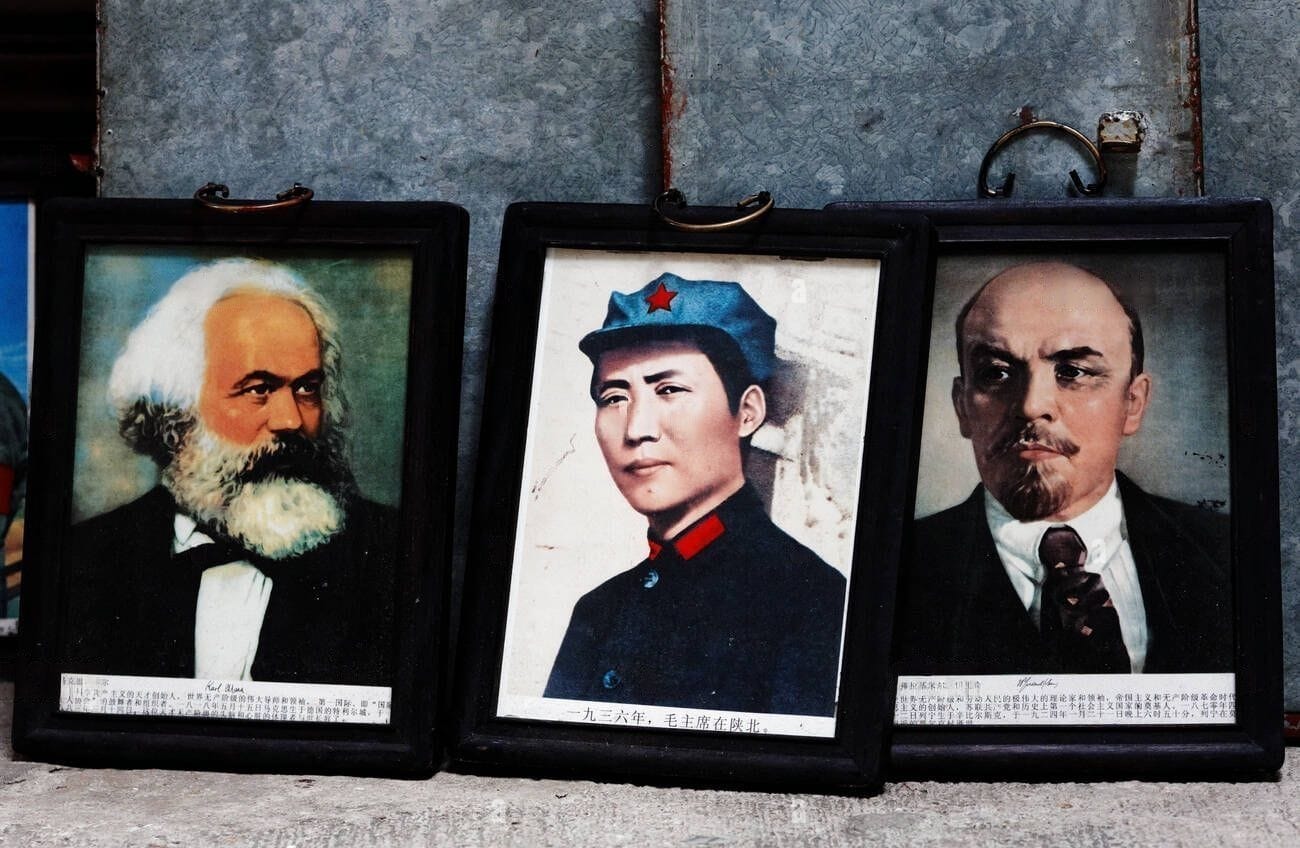
Today, some revolutionaries across the world, most notably the mass movements that draw inspiration from the Chinese Revolution in India and the Philippines, think of China as “social imperialist” or just downright “imperialist.” To what extent can we say this is correct analysis? Should we retain a distinction between the two today? Is this shared by parts of the contemporary Chinese left –if so, to what extent?
Well, Lenin was the one who coined the term “social imperialism.” He defined it as “socialism in name, but imperialism in essence.” Similarly, people refer to “market socialism,” as if using adjectives like “socialism” can change the nature of the market. Also, Hitler’s party was called the Nazi Party. Its full name was the National Socialist German Workers’ Party. Right? You can see that it appropriated both “socialism” and the “working class.” But it was fascism. The name and essence were different.
So, regardless of how they label themselves, we say that social imperialism is just another term for imperialism. After all, it’s the natural outcome of a market economy. Ultimately, I don’t see much difference between “imperialism” and “social imperialism.” Social imperialism is simply a more accurate term for a country that is socialist in name but imperialist in nature. The key point is that it’s still imperialism, even if it’s called socialism.
Ten years ago, people thought I was crazy for saying this. But today, if I look at social media and people’s comments, they say China is a superpower. They’re just stating the facts. The facts are right there. How can you say China is still a colony or that it’s being run by the comprador class? The trade war made all of that fall apart. Then there’s this whole thing about the central-peripheral dichotomy: “China is being exploited and can only be subservient to the West.” Now, however, the fact is that China primarily exports high-tech products. China is moving up the food chain. If you don’t use a Marxist analysis that considers class, and analyze the state, and relations of production, your theory may look fine temporarily, but it will quickly fall apart.
That’s why I’m impressed by what Lenin wrote over 100 years ago. He essentially explained how monopoly capital works. His ideas have withstood the test of time. Look at the last 100 years. Other than Lenin’s theory, what other theory has withstood the test of time? I don’t see any. Maybe I’m just dumb. But I still don’t see any! Lenin’s analysis shows that monopoly capital controls resource markets and supply chains. This explains everything, doesn’t it?
Today, I think it’s safe to say that very few people consciously believe that China is being exploited by other countries. Of course, there are always nationalists who claim, “We’re being exploited.” I recommend those people read Lenin’s 1915 article, “Imperialism and Socialism in Italy.” In it, Lenin criticizes Italian socialists who claim that Italy is “being exploited.” Yes, if you aren’t the top dog, you will be exploited. However, being exploited does not prevent you from being an imperialist.
As far as I can tell, they’re now claiming that China is no longer a colony. “But let’s not call it imperialism,” they say. They’re not serious, though. They’ve become so degenerate that they think Trump is an ally of the working class. They’ve become ridiculous. They’re against neoliberal policies, yet they find Trump to be their ally! And Putin, too. They’re social imperialists, pure and simple. They might use some Marxist rhetoric, but they’re anti-working class at their core. They treat any progressive movement as reactionary.
I mean, they don’t have much influence over Chinese people anymore. If you have a fundamental difference in class analysis and how you view society, there’s no need for dialogue. I used to think we had some common ground and that there was just a misunderstanding. But I’ve realized that it’s more than that. It’s similar to why Lenin called Kautsky a “renegade.” It’s not just a misunderstanding. They’re actually on the side of imperialism. They’re pitting one imperialist against another. They’re taking sides in imperialist rivalries.
Over the past ten years, China has seemingly become a more important locus of global power. The U.S. has more explicitly started to view it as its main competitor. Currently, we are in a period when the “China threat” narrative and “China bashing” are on the rise, particularly in U.S. mainstream media and academia. While European imperialists emphasize Russia’s military expansionist aims, U.S. imperialists do the same with China. Do their concerns reflect China’s actual military and economic development and policy, or are the imperialists merely creating adversaries to further their accumulation through destruction? In this regard, what do you think about the argument from some on the left that China and U.S. imperialism are interdependent within the capitalist world system?
Well, I mean, I can see how that argument would make sense at a certain point. For example, during the Cold War 1.0, the Soviet and Eastern Bloc economies were somewhat isolated from the rest of the world. There was a lot of talk about the “Soviet threat.” This narrative served as an excuse for the U.S. to station troops in Europe and Japan. This became especially clear after the collapse of the Soviet Union. The only countries seemingly capable of challenging U.S. domination were the other industrialized economies: Europe and Japan. Therefore, the U.S. kept instigating conflicts with Russia to ensure its irreplaceability in these regions. This explains NATO’s eastern expansion. The U.S. is trying to entice Russia into responding, which would give them an excuse to control Europe.
Today, however, Cold War 2.0 is different. Yes, the Chinese economy is highly intertwined with the Western economy, and the two are highly dependent on each other. Globalization has made them highly interdependent. So this is not just like Cold War 1.0, during which the U.S. used the threat of the Soviet Union as an excuse to control European countries.
Instead, the U.S. sees that China is carving away at its sphere of influence in the economic realm. China is no longer only engaged in labor-intensive production; it has a much broader presence around the world. Twenty or thirty years ago, China was known for producing cheap products like shoes and toys. Today, China dominates the production of high-end products. This directly threatens the U.S., not only economically, but also in terms of technological and military leadership. So, you can’t just call this crying wolf. It’s not! The wolf is here. It’s a real threat to U.S. imperialism.
And the outcome will not be the same as in the late ’80s and early ’90s when the U.S. was concerned about Japan’s economic growth. I remember when Japan’s economic growth made the U.S. nervous in the 1980s. But the U.S. was able to stop Japan’s economic development. They forced Japan to concede in many areas, not only in finance, but also in high tech, and made Japan no longer threaten the U.S. They sued Japanese semiconductor and electronics manufacturers, accusing them of “stealing technology.” The court and jury were in the U.S., so Japan had no way to argue back. Because the U.S. had military bases in Japan, Japan had no choice but to capitulate. Consequently, Japan has experienced 10, then 20, and now 30 years of economic stagnation, and scholars around the world –in the U.S. and China– blame Japan for its failure. They say, “Japan didn’t do this right or that right.” However, it was the U.S. that crushed Japan’s ability to develop. Think about it: If you’re the head of Toyota contemplating with new technology that challenges U.S. domination, you know they’re going to stop you. You know that. Would you invest in new technology? No, because you know what would happen if you competed against the U.S. in any area. So, you can only make small, incremental changes. The only thing you can do is invest around the world without challenging U.S. domination.
We saw China developing in a similar way, which threatened the U.S. They tried to put pressure on China to stop its progress. But China is not backing down. Why? Because China has military sovereignty. There are no U.S. troops here. With military sovereignty comes political and economic sovereignty. This is not a Cold War 1.0 situation. Unlike the Soviet Union, the Chinese economy is not isolated from the rest of the world. Instead, it is by far the largest. Thus, the U.S. is unable to force China to back down. Therefore, it is also impossible to compare this situation to that of Japan. It’s very different.
So, in your opinion, why doesn’t China leverage this advantage on a larger scale to benefit oppressed peoples around the world, given that Chinese official media outlets continue to promote “South-South cooperation” and “anti-hegemonism”? Over the last three years, we have witnessed the livestreamed genocide of the Palestinian people at the hands of the Zionist settler-colonial proxy of Western imperialism. This has arguably evolved into a broader war of extermination against the peoples of West Asia, particularly with the recent imperialist aggression against Iran. But China’s response has been, at best, ambivalent. Many revolutionaries and anti-imperialists worldwide argue that a communist party with a nuclear arsenal could have done much more. How does the Chinese state officially make sense of and legitimize this?
Well, that depends on the nature of the state. If you see the state as an imperialist power, then you can understand why it acts the way it does. It all makes sense. They want other countries and imperialist powers to fight each other, weaken themselves, and then they step in. That’s precisely what the U.S. did in World War II. Remember, the U.S. started out as isolationists who didn’t want to get involved. Then Pearl Harbor happened, and they joined the war. However, they didn’t fight hard until 1944, when they invaded Normandy. Before then, there were only a few clashes with Japan over a few islands in the Pacific. I don’t know of any major battles the U.S. engaged in before 1944. Basically, the U.S. got involved when everyone else was weakened and they saw that if they didn’t enter the war in Europe, the Soviet Union would take over. So they rushed in. This makes sense from an imperialist point of view. If you have the illusion that the working class is in control, then you can raise these questions. However, if you think they’re simply social imperialists, then the question doesn’t arise. It’s like asking why the U.S. practices imperialism.
But some even trace the origins of China’s foreign policy transformation back to the final years of the Mao era, when the right and left factions were engaged in a fierce power struggle. In a previous interview, you mentioned that Mao and Deng had different interpretations of the “Three Worlds” concept. This time, however, we’d like to delve deeper into the subject. Chinese foreign policy apparently witnessed an important shift from a period of enthusiastic proletarian internationalism, which sparked many global revolutionary movements in the 1960s, to the emergence of the “Three Worlds Theory.” This shift led to confusion, defeat, and disappointment among revolutionaries, especially those inspired by the Chinese Revolution, in countries such as Chile, Afghanistan, and Bangladesh in the 1970s. How can we make sense of this transformation? Can we understand these shifts in Chinese foreign policy in relation to shifts in China’s class character? Or is that too deterministic?
Actually, I recently discussed that topic on Chinese social media. More specifically, I think we should revisit the three basic contradictions in the world. The first is the working class versus the capitalist class. The second is the imperialists versus the oppressed nations. The third is the imperialists versus each other. Still, to answer this question, we must delve deeper into inter-imperialist rivalry and conduct further analysis.
Of course, there were inter-imperialist rivalries during World War I and World War II, but there were no superpowers. But once a superpower emerges, the inter-imperialist rivalry takes on a new character. When two superpowers control the world, for instance, they struggle not only to control oppressed nations, but also industrialized countries such as those in Europe, Japan, and Australia.
Historically, industrialized countries have tended to be imperialist in their relationships with Third World countries because they have monopoly capital. However, after World War II, when the U.S. became a superpower, most of these countries no longer required an armed presence in the Third World. They simply jumped on the bandwagon of the U.S. This allowed them to continue reaping superprofits from the Third World. South Korea, for example, does not have troops outside its borders yet still has monopoly capital. It is able, for example Samsung, to reap superprofits from Africa and the rest of the Third World. This is because it is under the umbrella of the U.S. superpower. Thus, the contradiction between imperialist powers and Third World countries remains primary. However, not all imperialist countries should be treated as equals.
To me, all the imperialists were pretty much the same during World War I —they were all fighting for dominance. They were like a pack of wolves, all vying to become the top dog. However, superpowers emerged after World War II. The United States was the first. Then came the Soviet Union, which gained a social imperialist character during the process of capitalist restoration. Thus, there were superpowers. The rivalry within the imperialist camp then shifted towards controlling other industrialized countries. So, the “Three Worlds Theory” was about how the Second World, consisting of industrialized countries, was caught between the superpowers; the relationship between the Second World and the Third World; and the contradiction between imperialist powers and national liberation movements. In other words, while the conflict between imperialists and oppressed peoples remained the primary one, conflicts also existed within the imperialist camp, including between superpowers and between superpowers and non-superpower industrialized imperialist countries. The Three Worlds Theory, as Mao put it, did not advocate taking sides among imperialist powers. Rather, it emphasized exploiting contradictions among superpowers and between superpowers and other imperialist countries to benefit the oppressed. Well, there may have been different interpretations later on, but this is how Mao presented it.
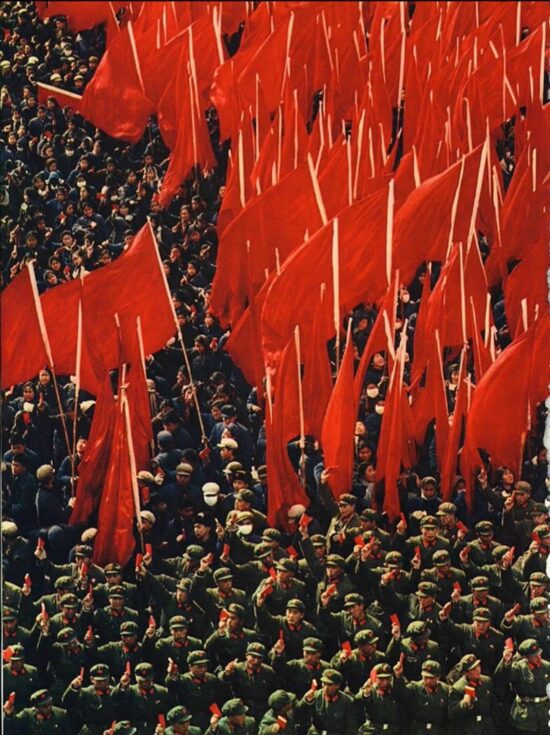
Today, we see that a hierarchy still exists among imperialist powers. They are fighting over resources. But this is not very difficult because Third World countries lack the leverage and sovereignty to be independent from imperialist countries. Thus, imperialist powers easily control these resources. Then, there’s the struggle for control of the markets. The largest markets outside the superpowers are the other industrialized countries: Europe, Japan, South Korea, Australia, etc. These countries have the capacity to consume industrial goods from developed countries. However, underdeveloped countries mostly provide resources and raw materials. They are not huge markets because they are too poor. In addition to competing over resources and markets, there is intense competition today over control of the supply chain. The supply chain has become critical because whoever controls it controls the superprofits. Currently, the most important supply chains outside of the superpowers are in Europe and other industrialized countries. This is why these regions have become areas of intense competition between superpowers over supply chain control. The “Three Worlds Theory” offers a deeper analysis of the contradictions within the imperialist camp and among imperialist powers. It is just like we must understand how to exploit the contradictions among capitalists to defeat the most powerful monopoly capital when dealing with monopoly capital, middle capital, and small capital.
Similarly, we must find a way to exploit the contradictions between the superpowers and the Second World. For instance, I recently traveled to Germany and France to better understand the situation there. One critical question I asked everywhere I went was how people viewed the war in Ukraine and how they saw Europe caught between the superpowers. In France, I also asked how people viewed the role of the French Communist Party before, during, and after World War II. What did they do right? What mistakes did they make? It’s important to make sense of that history because the situation today is very similar to what happened in World War II when France was occupied and controlled by Germany. So, what should be done in that situation? You are an imperialist country being dominated by another imperialist country. What would you do? Okay, how would you proceed? You have to unite with anyone fighting the Nazis in France, including some capitalist factions. But how can you do that without giving up your independence? These are the questions that arose during World War II. We see them playing out today.
For example, European countries now want to rearm. So, what’s the attitude? The left opposes European rearmament. That’s fine. But if you’re simply opposed to European rearmament, what will you do about the U.S. troops stationed there? Shouldn’t they be your number one target? Who are you fighting the most? Do you fight the U.S. occupation of Europe the most? Or do you fight against European rearmament? These are real questions. I don’t know enough about European politics to provide a good analysis. Based on what I know right now, however, it seems to me that the first thing European countries and people need to do is get the Yankee out of Europe. I mean, which one is more vicious? Is it the U.S. government based in Europe or your own government? So, if you don’t make “kick the Yankee out of Europe” your number one target and instead say “no armament” of your own country, you are helping the U.S. I know there are many other complications. I know every country is different. However, if you want to fight imperialist rivalry, the left should prioritize kicking the U.S. out of Europe. When Trump suggested pulling troops out of Germany, I said, “Great, pull them all out!” After all, it’s a good thing that U.S. military power in Europe is waning.
Of course, you also have to fight your own government. To reject this would be capitulationism. But how do we do that? That’s why we need to study history and learn from what happened in France. We have to make sure that we don’t flip-flop like they did. We need a policy that fights against the Nazis yet maintains independence. That’s why comparing what the French and Chinese communists did during World War II is important. The Chinese communists preserved their independence and targeted the right enemy at the right time. The French communists, however, failed to do so. There are many differences and lessons to be learned from this comparison.
But if we look back a bit at the history of the “Three Worlds Theory,” we also encounter some harsh criticism from within the left. Some accuse China of giving too much credit to U.S. imperialism in its competition with the Soviet Union in the 1970s. For example, some argue that, even though the Soviet Union was no longer socialist and had become a social imperialist power by that time, it was still providing weapons to many national liberation movements, including the one in Palestine. Shouldn’t revolutionaries have taken advantage of this contradiction, even if it was part of inter-imperialist competition? Or after the coup d’état in Chile, for instance, China immediately recognized the Pinochet government. This, among other things, led to dissatisfaction among revolutionaries worldwide in the 1970s. What are your thoughts on these criticisms? Were the different interpretations of the “Three Worlds Theory” somehow linked to class struggles in China at that time?
Although the Soviet Union supported Third World countries in their struggle against U.S. imperialism, it also sent troops into Afghanistan. This is similar to how imperialist powers competed during World War II. For example, the U.S. supplied China with weapons to fight the Japanese. It’s not unusual for imperialist powers to support liberation movements in other countries against their rivals. A revolutionary movement must, of course, take advantage of these contradictions. There’s no doubt about it.
I am not familiar with the specifics of China’s recognition of the Pinochet government. I have not researched Chinese foreign policy in depth during that time. Still, serious divisions likely emerged within the leadership regarding foreign policy. Even when normalization of relations with the U.S. took center stage, culminating in Nixon’s 1972 visit to China, the top leaders were divided on how to proceed. One consequence was that Lin Biao attempted to flee to the Soviet Union. Clearly, there was a keen disagreement about how to handle the situation. At that time, certain tendencies were diametrically opposed to one another. One tendency was to fight against the U.S. rather than the Soviet Union. Another tendency was to fight the Soviet Union while ignoring U.S. imperialism. Thus, the revolutionaries had to walk a fine line. It would not surprise me if some of this internal struggle is reflected in Chile’s situation as well. For example, when Henry Kissinger came to China in 1973 and asked for a “nuclear umbrella,” Zhou Enlai was slow in response. Mao was pretty angry about that because, when you’re fighting, it’s crucial to understand how to play the contradictions within the imperialists and ruling classes without being played. It’s tricky. It’s hard to do. It’s easy to make one mistake after another. This has happened many times in Chinese history.
For instance, the Comintern sent Wang Ming to China, where he took over the leadership of the Communist Party. However, he pushed for an ultra-“left” line. As a result, the Red Army suffered a devastating defeat and was forced to undertake the Long March. But when the anti-Japanese war began, this time, he started advocating a completely different approach. He tried to form a united front and give up the army, wanting the Red Army to be under Chiang Kai-shek’s control. These people flip-flop from one extreme to another. This often happens in the history of the communist movement.
So, basically, the Three Worlds Theory can easily devolve into the idea that communists in Second and Third World countries should join forces with their ruling classes against the superpowers. I know some later used the Three Worlds Theory to justify capitulating to their own ruling class. However, that is not what the Three Worlds Theory is. It is mainly about separating the superpowers from other countries. We must learn how to divide and conquer. The point is not to capitulate to your own ruling class. Rather, the goal is to exploit the contradictions among your enemies and defeat them one by one.
Finally, in light of all that has been said, if we are to return to the key question of our previous interview, what, do you think, are the prevailing legacies of Maoism today? Do they resonate with the key tasks of the Chinese working class and the revolutionary masses as they march towards tomorrow? What relevance do these lessons retain for the toiling masses beyond China?
It’s something I’ve been thinking about for the past few years. I came to the U.S. and met these Maoist groups, and then I went to Europe and met more of them. I kept thinking, “Okay, so in India and the Philippines, Maoism means surrounding the city from the countryside.” And that makes sense. But what does that mean for an industrialized country? Some people in Europe advocate for the same thing and claim the universality of People’s War. What does that mean? I mean, it’s pretty outrageous.
I talked to some people in France and gained more clarity. They’re against what you call a “peaceful transition” and the idea of winning parliamentary elections, transforming society, and achieving socialism peacefully. Basically, I agree with their view that it’s better to engage in militant struggle than to control your struggle within the legal framework. You can’t just constrain yourself within that legal framework when it comes to electoral politics. However, saying that we need to organize urban guerrillas today is suicidal.
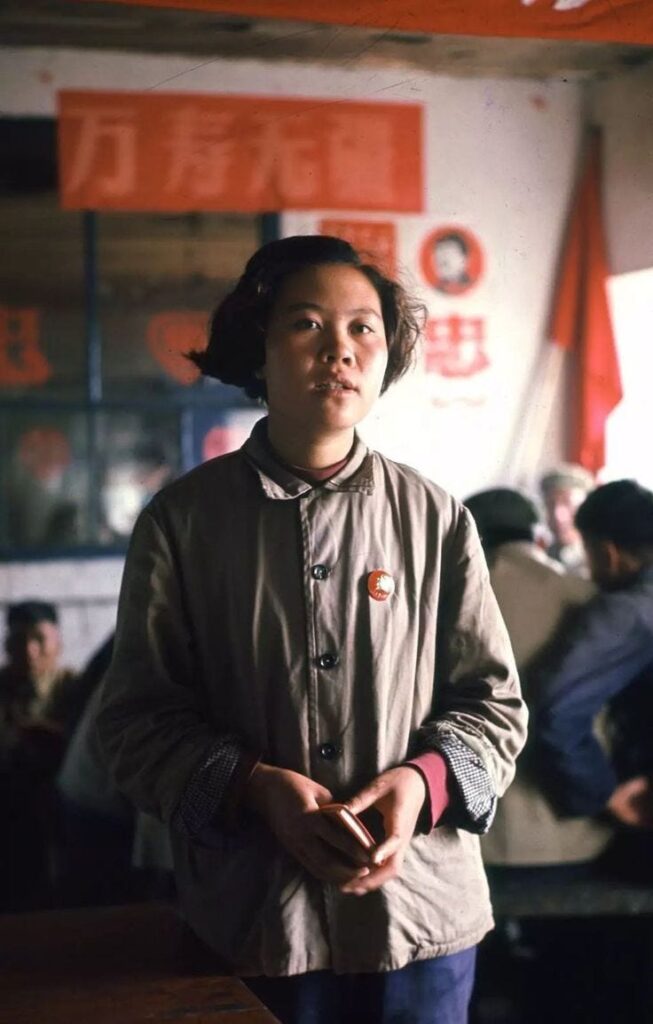
Secondly, Maoism addresses the question, “What is our aim?” How do you define socialism? How do you build socialism? How do you overcome the contradictions within socialism? These are the questions that Mao attempted to answer after 1957. The revolution succeeded in 1949, and the Communist Party took power. By 1956, they had essentially finished collectivizing agriculture, and all industry had become state-owned. So, they began constructing a socialist economy. But what’s next? Many new contradictions arose. How do you address the conflict between managers and the managed in socialized mass production? How do you plan the economy, and for whose benefit? How do you coordinate all these things? These became the core issues of socialism.I asked some people in the U.S., “What does Maoism mean?” After thinking about it for a few years, a few things stand out to me. One is that without Maoism, we would not recognize social imperialism. We wouldn’t understand the Cold War 1.0 or today’s Cold War 2.0. In other words, to understand social imperialism, you need Maoism. Maoism provides an explanation of how a revolutionary force can transform into its opposite. It explains how capitalist roaders in the party can take over a working-class state and transform it into an imperialist country. Maoism teaches us the meaning behind Leninism. That’s one thing.
So basically, you have come up with a new contradiction that you didn’t have before: the contradiction between maintaining the leadership and the vanguard party on the one hand, and having mass supervision on the other. Well, you have social democrats and some Trotskyist groups that negate the need for leadership and a vanguard party. Then there are the capitalist roaders who say that all we need is a party leadership —which means leadership for them. In trying to negate this contradiction, if you negate either the leadership of the party or the supervision by the masses, you will not have socialism. That’s what Maoism means: What kind of socialism are we building, and what is our aim? That’s another part of the contribution.
Now, I think the third part is the most crucial: how to conduct a struggle within a revolutionary movement. In this regard, I believe Mao contributed much more than Lenin was able to formulate, systematize, or summarize. Basically, Mao did what Lenin did, but Lenin did not have the opportunity to articulate it as clearly. For example, Mao developed the ideas of rectification and inner-party struggle, as well as the concept of “curing the disease to save the patient” and the formula of “unity and struggle.” Unfortunately, Mao’s contribution of how to conduct struggle within the revolutionary movement has been largely undervalued. Yet, we see that he had already put these approaches into practice even before 1949. For example, we all know about the 1942-1945 Yan’an Rectification Campaign to unify the party before they gained state power. In the line struggles within the revolutionary movement, do not crush people, but rather, educate them, transform them, and win them over to the correct line. Today, you can see the importance of this even more clearly.
The other contribution is about how to fight capitalist roaders. The term “capitalist roaders” was coined by Mao in 1965 to describe those in the party and in positions of authority who were on the capitalist road. But how can this be made clearer? In retrospect, we can see that the capitalist roaders are people who are staunch defenders of bureaucratic privileges. In other words, the higher you rank, the more perks and privileges you have. If you are removed or demoted, you lose all your perks and privileges. That’s called bureaucratic privilege. Then there are those who antagonize mass supervision. They think they are gods who cannot be criticized. They use the capitalist way of organizing production. We define these people as capitalist roaders.
Now, the question is how to deal with that, which is what the Cultural Revolution was all about. It’s still about overcoming wrong ideas and wrong lines within the revolutionary movement. Although the Cultural Revolution eventually failed to stop capitalism from emerging, there are still lessons to be learned.
Today, we see that the left is divided around the world. What we need to learn is how to unite the left. Maoism helps us do that by combating all the wrong ideas. The purpose of struggle is to build unity, not division. So, when you struggle with these wrong ideas, you have to start with the desire for unity. You’re trying to win them over. You’re not trying to win the argument; you’re trying to win the revolution! So, how do you win the revolution? If you believe your ideas are correct, your line is correct, you should try to win more and more people over your line. How do you win people over? You shouldn’t try to denounce them. If you try to hit them and cancel them out, you’re not going to win them over, right? The point is to win more and more people over the correct line, over the correct ideas. I’d say Mao did what Lenin did, but more articulately and systematically. For example, Lenin spent more than a dozen years fighting Trotsky. But when Trotsky wanted to join the October Revolution, Lenin said, “Come on, join.” He gave Trotsky the responsibility of building the Red Army and doing everything. So, you basically unite with anyone who wants to build a revolution. Regardless of how harsh the debate is, or how strongly you criticize your opponents’ ideas, your goal should be to win them over. I think Lenin’s struggle with Trotsky, followed by his invitation for Trotsky to join the revolution, is the best example of how to conduct a struggle. So, Mao was able to formalize, articulate, and summarize all of these things. It may not seem like a new or important contribution, such as understanding the true nature of capitalist roaders or developing a true understanding of social imperialism, but it provides a clear idea of how to conduct struggles within revolutionary movements. Therefore, it’s a tremendous contribution to Leninism, and a topic that remains highly relevant today.
Of course, there are many other things to consider, such as those in the fields of philosophy and economics. Those are great, too. However, I believe that Maoism’s most significant contributions are its understanding of capitalist roaders within the party, its interpretation of how to build socialism, and its awareness of social imperialism. Marx could not have studied these things. Lenin passed away too early to study them. And Stalin didn’t do a good job of analyzing them. Mao did a great job doing it. So, that’s what I think MLM means.
Thank you for this insightful conversation.
Thank you. •
Fred Engst (Yang Heping) was born in Beijing in 1952 and grew up on a state-owned farm in Xi’an. A former Red Guard and factory worker, he later moved to the United States, where he worked as a laborer while pursuing his education and earned a Ph.D. in economics from Rutgers University. Since returning to China in 2007, he has continued his academic and political work and currently teaches econometrics at the University of International Business and Economics in Beijing.
* The interview took place via video call on May 28, 2026.