Introduction
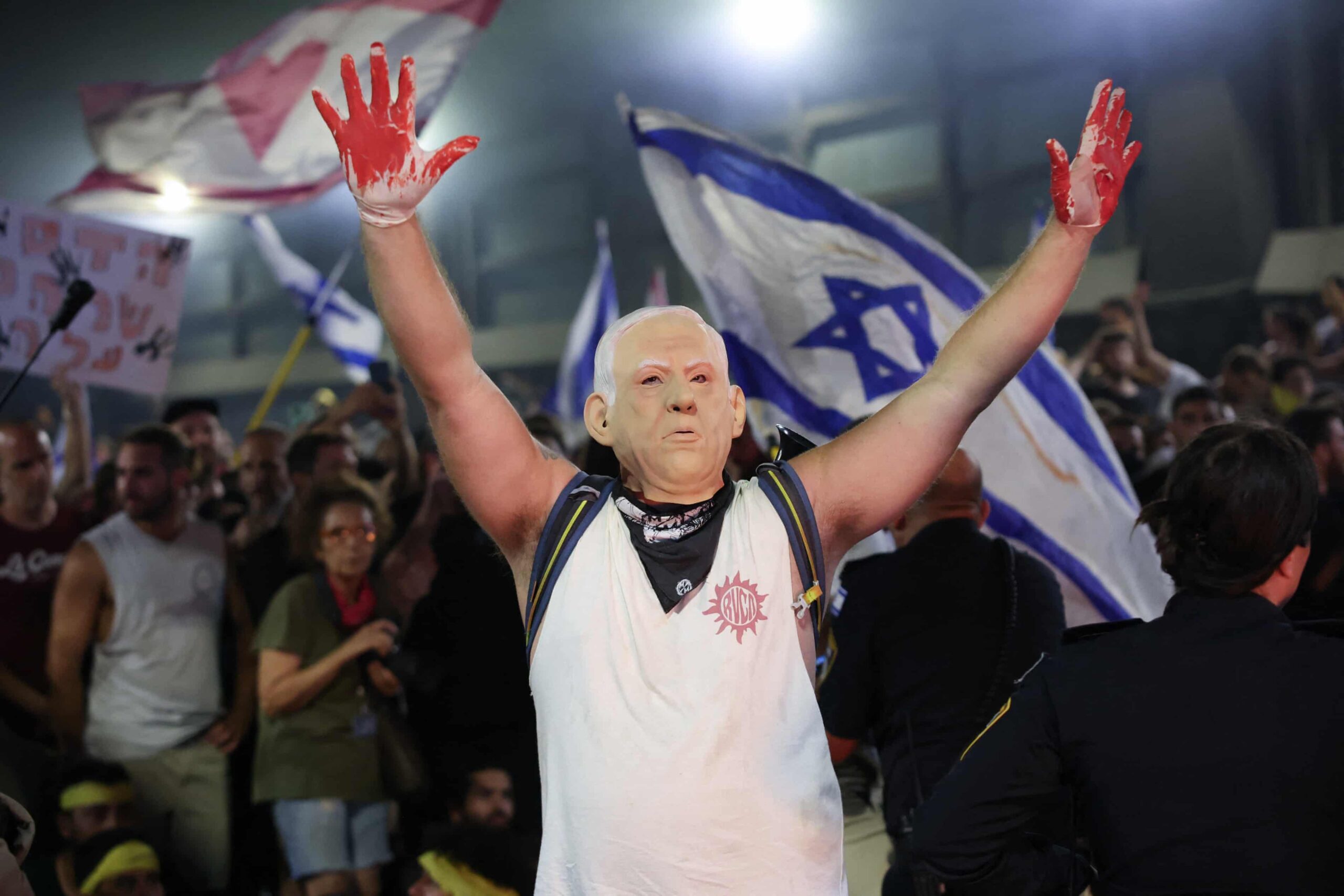
On 1st September 2024, during the sweeping destruction of the Gaza Strip by the Israeli army, the chairman of Israel’s dominant labour federation called for a nationwide general strike. The strike had a specific and limited aim: it was not explicitly to protest the war, but to voice opposition to the Israeli government and support growing public demand that Prime Minister Netanyahu prioritise the return of the Israeli hostages being held by Hamas.[1] This was an almost unprecedented intervention by Israel’s largest worker organisation, the Histadrut, in a field that usually enjoys almost total consensus from the Israeli Jewish public: security, international relations and war.
The call for a general strike seemed to bear great potential. Many other organisations declared they would join too, including trade unions and professional organisations, such as the Israel Medical Association, the Bar Association and the Teachers’ Union. Many of the Histadrut’s own powerful worker committees also joined. Public sector offices were shut including the Employment Service and National Insurance Institute, government ministries, and the water corporations; public transport was truncated, school hours were shortened and kindergartens closed. The Federation of Local Authorities declared its support, and local authority offices in major cities including Tel Aviv and Haifa were closed. Hospitals provided only emergency services, activities at Haifa port were stopped and even flights from Israel’s main international airport were suspended. Moreover, the Histadrut received backing from various private-sector employers including the Israel Business Forum: restaurants, retail centres and many IT firms ceased operations for the day, as did the major banks.[2] The call seemed to galvanise the public too: that day, an impressive 5-6% of Israel’s population participated in the weekly Saturday protests in Israel’s main cities against the government’s handling of the crisis, including demonstrations in front of the Prime Minister’s Office in Jerusalem.[3]
However, the public was divided: for some, the Histadrut’s call was tantamount to treason, and even some of the Histadrut’s own worker committees refused to join the strike, while local authorities associated with the political right, including Jerusalem, operated as normal. Moreover, the government immediately requested an injunction. Finance Minister Bezalel Smotrich, also head of the Settlement Administration at the Defence Ministry, said the strike had no legal basis and would undermine the economy at a time of war.[4] The courts agreed, ruling that the Histadrut’s action was political and therefore illegitimate, and demanding that it stop the strike. The Histadrut complied; by mid-afternoon, it had all come to an end.[5]
However, the unprecedented collective action by Israel’s largest workers’ organisation raises questions about its political status and more generally the role of organised labour in Israel. Like trade unions in many parts of Western Europe, the Histadrut was long associated with the political left. However, many Western European trade unions have found their links with the political establishment weakened and their influence over state policies fading; even their relationship with labour parties can no longer be relied on. The Histadrut, in contrast, is still one of the country’s most important political actors, and a crucial arm of the Zionist project past and present – a role that often clashes with its trade union functions. Above all, the Histadrut’s brief strike against the government’s wartime priorities raises the question of the Histadrut’s relationship to Zionism’s ‘other’ – the Palestinians – and their place under Israeli rule.
Jewish labour, then, was not organised solely in opposition to employers or the state; rather, it was organised above all as a nationalist, settler movement with the explicit aim of excluding the Palestinian Arabs from the growing and increasingly dominant ‘Jewish’ economy. This is not to deny the importance of an ethos of worker solidarity and labour socialism among its ranks, and indeed the Histadrut sometimes acted as a trade union, representing workers, and even established ‘Arab’ unions too – separate from its Jewish organisations – but its key function was as the executive arm of Zionist settlement efforts.
Trade unions have always been political organisations, manoeuvring between various state and government agendas and the priorities of their main power base: their members. Historically, solidarity between all workers has rarely been more than an aspiration, and trade unions around the world have a chequered record as regards their relationship with noncitizens such as migrant workers or more broadly those different from their core membership.[6] It is true that unions have been crucial in gaining access to migrant workers’ rights and collective representation, as well as in the struggle for social rights and integration – and more broadly, in the promotion of democracy.[7] However, where interests clash or are perceived to clash, unions have tended to prioritise their existing members over new worker groups, whether citizens or migrants, such that trade union identities and labour market segments are often constructed along national or ethnic lines.[8] In addition, the nature of trade unions’ relationship with the state and regime shapes and constrains trade union responses to the ‘other’.[9] Even where trade unions have made efforts to include new worker groups such as migrants, the extent of that inclusion can vary, with differing approaches and levels of success in obtaining free access to jobs, workers’ rights, individual and collective representation, and social citizenship and human rights for these workers.[10]
In the case of Israel, organised labour’s relationship to the ‘other’ is further complicated by the state’s ambivalence towards the Palestinian population. Like unions in other countries,[11] the dominant unions in Israel are subject to ethnonational pressures as organisations firmly embedded within the dominant ethnonational (Jewish) population. These pressures generate what Preminger and Bondy call an ‘exclusionary imperative’ to exclude Palestinians and thus maintain ethnonational dominance and prevent downward pressure on wages;[12] however, this imperative is moderated by an ‘inclusionary imperative’ to include these Palestinians as a source of cheap labour serving the needs of the Israeli economy.
Much scholarship explores the extent and nature of Palestinian inclusion in the Israeli labour market.[13][14] However, scholarship on the ways in which this inclusion/exclusion is impacted by, and impacts, trade unions, organised labour and the institutions of collective industrial relations is just beginning. Drawing on this burgeoning scholarship, we analyse the position of the Histadrut in national politics – and accordingly vis-à-vis Israel’s ethnonational ‘other’, the Palestinians – to discuss the potential for a progressive, inclusive labour movement in Israel, one able to counter the increasingly populist and strident Jewish ethnonationalism.
We begin by tracing the development of organised labour within Jewish settlement efforts through a historical survey of the Histadrut’s role in pre-state British Mandatory Palestine, establishing its importance firstly as the executive arm of the exclusionary, nascent Jewish community and only secondly as a workers’ representative organisation. We then outline key changes and continuities that followed the establishment of the State of Israel in 1948, the enhancement of the Histadrut’s trade union role, and the influx of tens of thousands of noncitizen Palestinians from the territories newly occupied by Israel after the 1967 war. Following groundbreaking critical scholars, we concur that an important watershed was the Likud election victory of 1977 and the subsequent liberalisation of Israel’s economy. We outline the impact these changes had on the Histadrut, the challenges to its status as a political actor and the undermining of its power as a trade union, and give some examples of how the Histadrut attempted to maintain its dominance. These attempts, we assert, in effect if not intentionally increased Palestinian representation and improved the employment conditions of noncitizen workers, enhancing the Histadrut’s role as a class-based actor at the expense of its exclusionary, ethnonational role.
Finally, we analyse the tensions in the Histadrut’s position over the last 30 years, assessing the chances that its contradictory interests will result in greater inclusion of Palestinians within the representative frameworks of Israeli industrial relations institutions. Our evaluation, though not entirely without hope, is pessimistic: the Histadrut’s power base and the strategic choices it has made over the years have strengthened its commitment to ethnonational exclusion and constrained its ability to constitute a broad, class-based platform for worker solidarity.
Jewish settlement, the labour movement and the ‘exclusionary imperative’
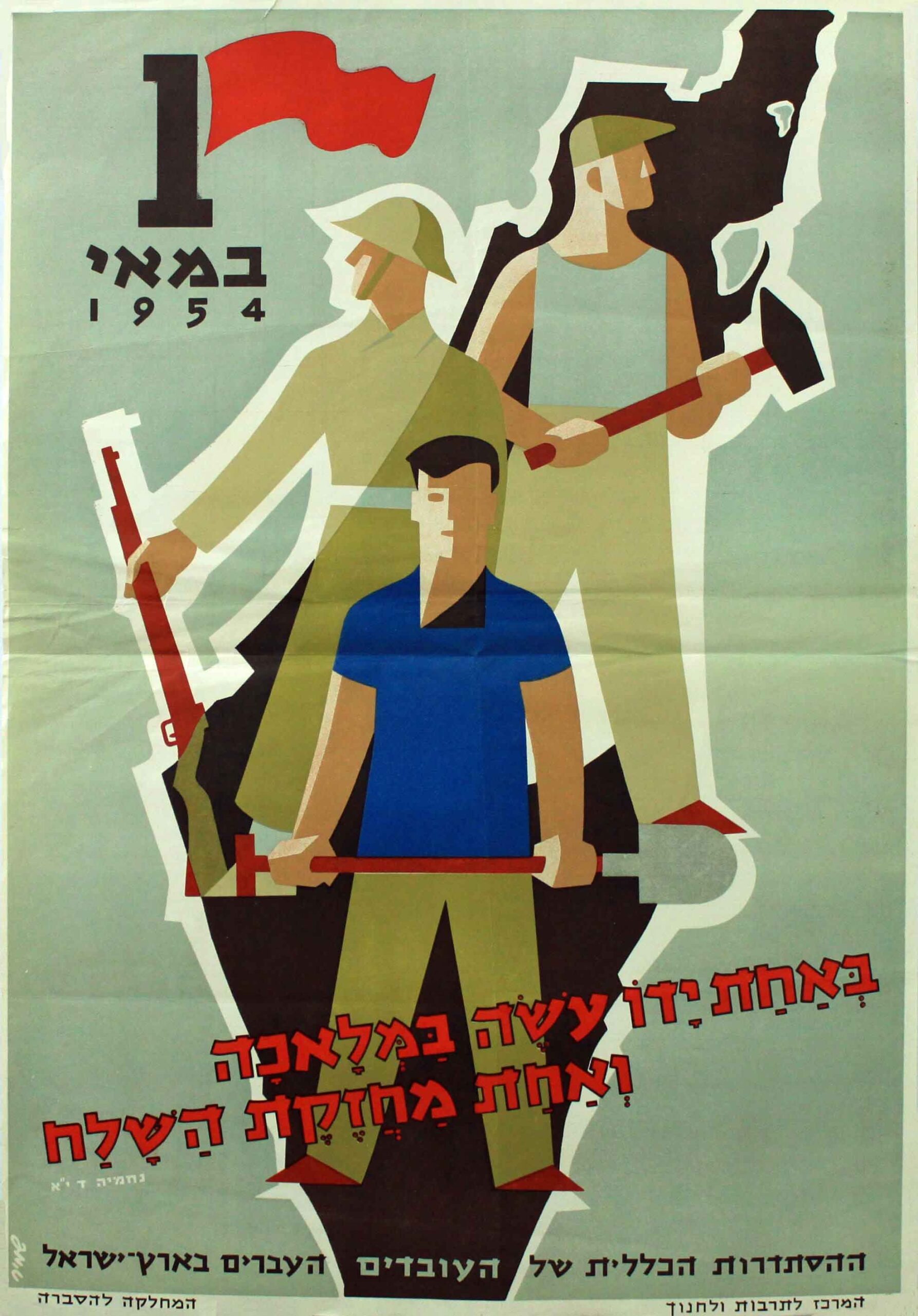
The Histadrut has always been by far the most dominant workers’ organisation in Israel and was a dominant institution even before the State of Israel was established in 1948. Yet it is not a labour federation in the sense understood in Western Europe. It is not an alliance of independent unions, but a single all-encompassing organisation within which unions developed firstly as administrative units, though with time some increased their autonomy. This meant a very centralised structure with power concentrated in the leadership which, for most of its history, maintained extremely close ties to the political establishment.[15]
This structure is the result of the Histadrut’s historical role in the absorption and settlement of Jewish migrants from the time of its foundation in 1920 in Palestine under the British Mandate. Zionist leaders in the Yishuv – the Jewish community of Palestine – intended that the Histadrut function as a ‘state-in-the-making’, enabling the Jewish community not merely to manage its own affairs as the British authorities encouraged, but also to develop both the institutions and the conditions which they hoped would lead to an independent Jewish state. As such, the Histadrut became the umbrella organisation and legal owner of a range of enterprises in construction, infrastructure, banking, agriculture, retail and transportation, as well as the main provider of health services through its HMO Clalit, and sponsor of cultural and sport events.
A key problem for the Zionist movement was alleviating the hardships of immigration and ensuring jobs for the Jewish immigrants, many of whom did not last long in the challenging conditions of early-20th century Palestine. As Shafir has argued,[16] Israel’s all-encompassing labour movement and its well-known collectivist economy and society, including the kibbutz movement, were at least partly a solution to this problem, enabling market principles to be circumvented in two key areas crucial to settlement: land and labour.[17] Employers too supported this centralised quasi-socialist economy, prioritising the national project over class interests.[18]
The Histadrut was at the heart of this project: its enterprises were protected from competition with Palestinian-Arab workers and enjoyed an internal market, and it was supported by external funding pouring into the Yishuv which formed the basis for a circular flow of capital within the Histadrut-dominated economy. Through this centralised ownership and management structure, the beginnings of separate economies for Jews and for Palestinian-Arabs were established in Palestine, though in practice, until 1948, the ‘separation’ was only ever partial since the Zionist movement did not have complete control over the land or the labour market, while the public sector – controlled by the British – employed both Jews and Arabs alike.[19]
Jewish labour, then, was not organised solely in opposition to employers or the state; rather, it was organised above all as a nationalist, settler movement with the explicit aim of excluding the Palestinian Arabs from the growing and increasingly dominant ‘Jewish’ economy. This is not to deny the importance of an ethos of worker solidarity and labour socialism among its ranks, and indeed the Histadrut sometimes acted as a trade union, representing workers, and even established ‘Arab’ unions too – separate from its Jewish organisations – but its key function was as the executive arm of Zionist settlement efforts.[20]
1948 and the beginnings of change
The establishment of Israel made many of the Histadrut’s roles redundant. Competition from cheap Palestinian workers was eliminated, and control over land was achieved with the fleeing and expulsion of some 700,000 Palestinians in the Nakba and through the imposition of military rule over those Palestinians who remained inside the new state.[21] Under military governance (in place until 1966), the mobility and employment opportunities of these Palestinians were tightly controlled and restricted for the benefit of the ‘Jewish’ economy.[22]
Nonetheless, the Histadrut’s close relations with the ruling party Mapai (forerunner of the Labour Party, known today as The Democrats following a merger with Meretz) ensured its continued prosperity in the new state: in return for its support, the government ensured the Histadrut kept hold of most of its enterprises and continued to play a central part in the absorption and settlement of (Jewish) immigrants, while promoting the interests of its members in state decision-making forums.[23] The Histadrut cooperated with the state’s continued (partial) exclusion of the Palestinian population, limiting their membership (full membership was enabled only in 1965)[24] and focusing its considerable clout on developing ‘Jewish’ towns and providing services to Israel’s Jewish citizens.[25] It was also used as a mechanism for distributing favours (e.g., access to work and services) to Israel’s Palestinian citizens, thereby ensuring their ‘loyalty’ to the new regime. It thus maintained its membership base and economic and political power.
At the same time, the Histadrut developed its trade union role. In the first three decades of its existence, partly as a way of ensuring control over the absorption of a huge wave of Jewish immigrants, Israel maintained a robust neocorporatist economy, with peak-level tripartite collective bargaining and an extensive Ghent system in which the labour federation had key administrative roles in socioeconomic policy.[26] Extension orders were used widely to extend the coverage of collective agreements to all workers in specific sectors and sometimes even throughout the labour market. Some 80% of the workforce was unionised, most of them in the Histadrut which was also the second largest employer (after the state), maintaining many of the commercial interests it had controlled before 1948. The Histadrut thus represented the vast majority of workers in Israel and wielded significant clout in the sphere of labour relations and economic policy through its powerful workers’ committees. This representation included Palestinians too, especially in the public sector where many were able to find employment.[27]
However, the 1967 war and Israel’s occupation of additional territories changed the configuration of Israel’s labour market and shifted the balance between ethnonational exclusion and de facto economic inclusion of Palestinians. Almost immediately after the ceasefire, tens of thousands of Palestinian workers from the West Bank and Gaza Strip were incorporated into the Israeli market, as ready labour and as part of Israel’s efforts to pacify Palestinian resistance to the Israeli occupation.[28] This coincided with the increasing incorporation of Israel’s Palestinian citizens, whose freedom of movement and employment opportunities were greatly enhanced with the removal of military governance in 1966. Moreover, the incorporation of these unorganised workers was instrumental to the pacification of Jewish workers, undermining the power of organised (Jewish) labour in those sectors exposed to non-citizen Palestinian workers, as well as throughout the labour market.[29] The Histadrut too benefited from the influx of unorganised workers, as a ‘responsible partner’ to the government’s efforts to constrain wage inflation and in battling militant worker committees that challenged its central authority.[30]
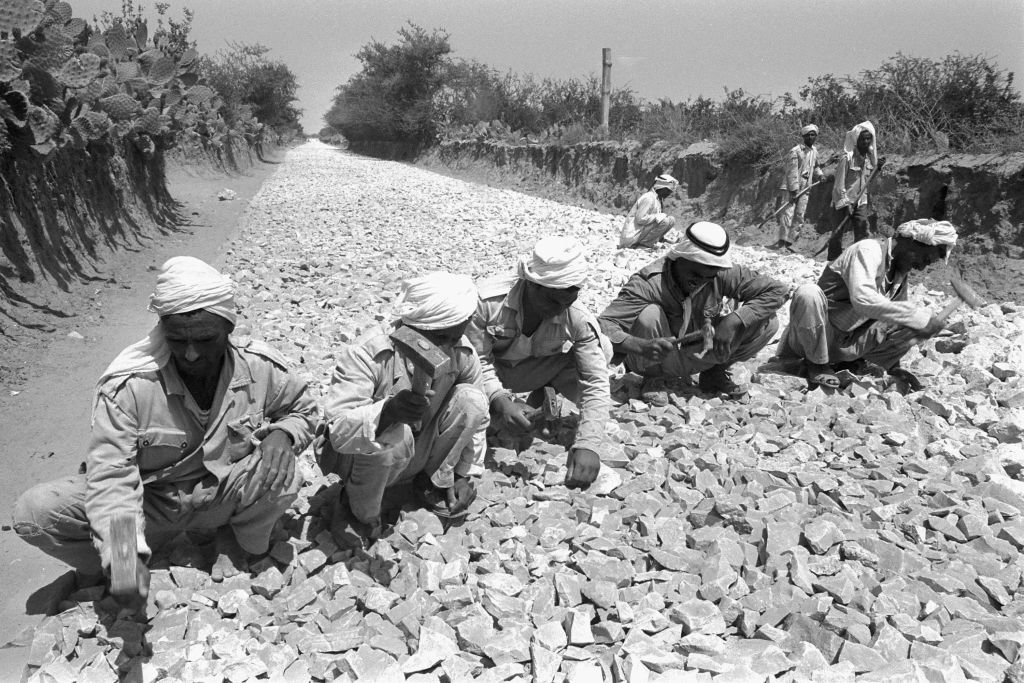
Thus, from this time onwards, Palestinian workers became a crucial part of Israel’s labour market, especially in the construction and agriculture sectors – sectors that Jewish workers had struggled to dominate in the pre-state period (when they were controlled by the British Mandate authorities), and which rapidly became reliant on these cheaper and less demanding Palestinian workers. Their numbers have fluctuated over the years, for various reasons including the demands of Israeli employers, Israel’s security concerns and the government’s changing aspirations regarding these occupied territories:[31] in the 1980s, entry for Palestinians was severely curtailed due to the security fears raised by the first intifada; and during the 1990s and the ‘peace process’, when for a brief period the dominant political bloc in Israel believed in separation between the Palestinian and Israeli labour markets, their numbers were gradually reduced and they were replaced by increasing numbers of migrant workers.[32][33]
Despite these brief periods of exclusion, as part of Netanyahu’s ‘economic peace’ doctrine (or ‘conflict management’ strategy) that became Israel’s dominant approach to the Palestinian from the mid-2000s onwards, Palestinians from the occupied territories remained a vital workforce in the Israeli economy right up until the Hamas attack: in October 2023, over 100,000 Palestinians worked officially inside Israel, with an additional 40-60,000 working without a permit (‘illegally’) and some 30-40,000 in the special industrial zones and West Bank settlements.[34]
The liberalisation of Israel and the changing status of organised labour
The mahapach of 1977 – the victory of the first Likud government – marked a watershed moment in Israeli politics and economics.[35] For the first time, the Likud party defeated Labor, ending nearly three decades of Labor Party hegemony. This political shift initiated profound economic changes that would fundamentally alter Israel’s class structure and the Histadrut’s position within it. These changes undermined the Histadrut’s status, while allowing the emergence of various forms of precarious employment; but at the same time they created the space for new employment relations actors including rights organisations and new trade unions that challenged the dominance of the ‘old left’ and its institutions.[36] It also led to a belated shift in the Histadrut’s stance vis-à-vis the Palestinian workers from the occupied territories.[37]
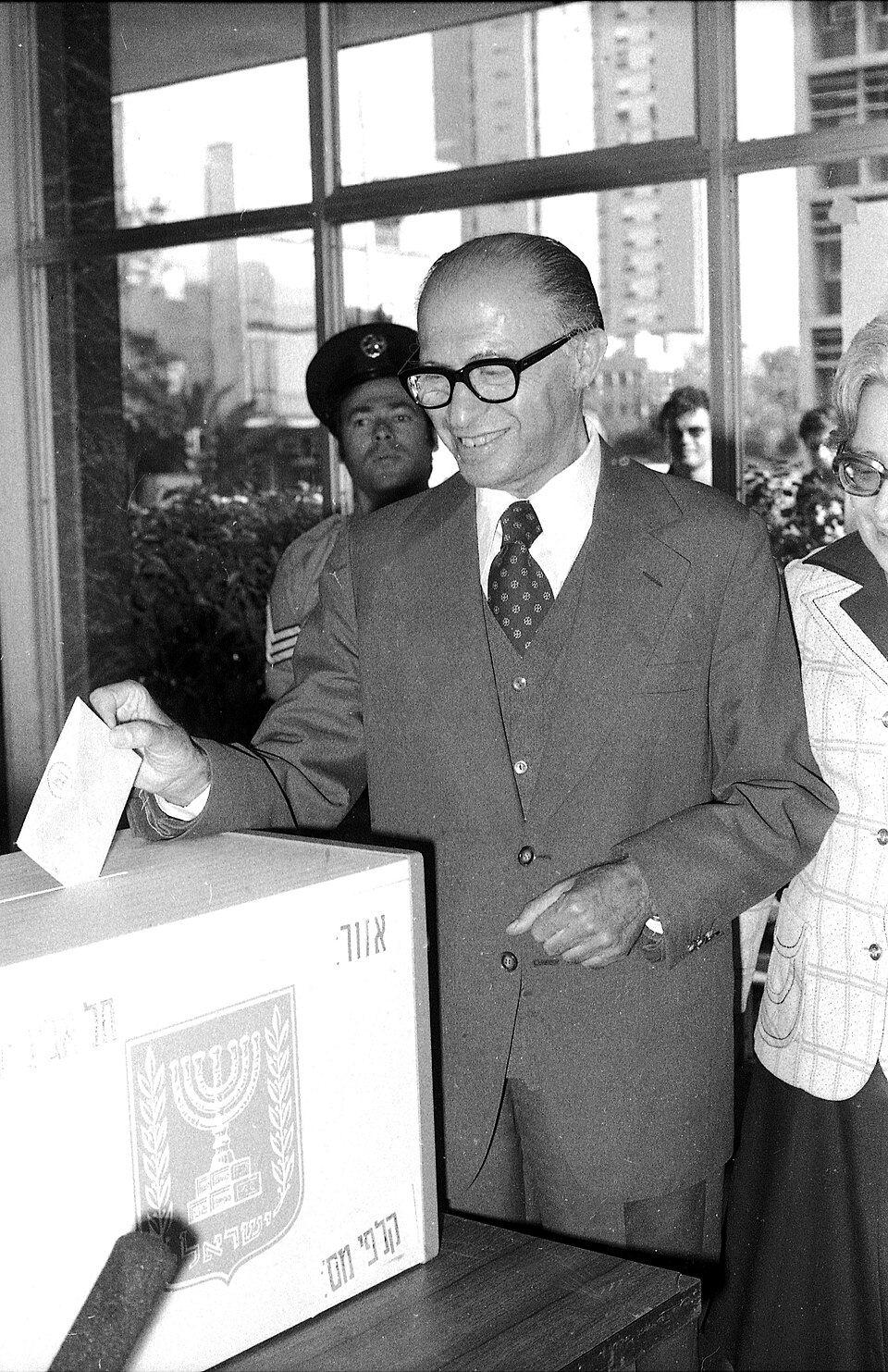
High unionization density had given the Histadrut enormous political leverage, as it could effectively mobilize the majority of Israel’s workforce. Crucially, its elected leadership was affiliated with the Labour Party. The Likud’s support base was the working class, as well as the settlers in the occupied territory, and the ultra-Orthodox communities. The new Likud government, understanding that its rival in opposition derived considerable political power from the Histadrut, set about weakening it by various means. Importantly, it stopped state subsidies for the Histadrut economic conglomerates and began a process of their privatization, as part of a broader economic liberalisation. As Laron puts it, ‘the Likud leadership adopted neoliberal principles of governance because they offered a ready-made template to take over or break the institutions that Israeli Labor created and controlled until 1977.’[38]
Meanwhile, the Labour Party abandoned the working classes and became the party of the middle classes, distancing itself from its traditional electoral and institutional base – a process of realignment seen also in many other western countries. This left-leaning professional, liberal bourgeoisie benefited from the opening up of Israel’s economy and the opportunities created by globalisation. Thus, upon its return to power in the unity government of 1984, Labour made no effort to roll back neoliberalisation: with direct US influence, its leaders came to believe that Israel’s key problem was a bloated welfare state and overly powerful unions. Moreover, by the time of the new Labour government of the 1990s, the Histadrut, with its debts and sclerotic enterprises, had come to be seen as a liability, a burden on the government’s shoulders.[39] This process culminated in 1994 with the decoupling of the Histadrut from its health services, which had been instrumental in its ability to recruit members, thereby cutting its membership by half almost overnight.[40]
The Histadrut, increasingly hobbled by debt, acquiesced in this neoliberalisation, pacified by promises that its enterprises would be bailed out. The results included the growth of manpower companies and forms of precarious employment which further undermined organised labour,[41] and the gradual sale of Histadrut concerns.[42] It also led to increasing pluralism in employment relations as some workers and activists sought alternatives:[43] in 2007, the general trade union Koach Laovdim was established, which emphasises its internal democracy (in contrast to the Histadrut) and has close links with urban, educated activists in rights organisations. In 2011, the small organisation MAAN was recognized by the labour courts as a trade union after over two decades of activities as a worker centre.
Meanwhile the so-called constitutional revolution, marked by the legislation of two Basic Laws,[44] reflected a new approach to law that prioritised private property, universal human rights and the assumption of equality (freedom of contract) between employer and worker at the expense of social rights.[45] This constitutional revolution was a key development in the liberalisation and juridification of the employment relationship; and the assumption of a special political status for organised labour was its key casualty.[46][47] The decline of the neocorporatist industrial relations framework was characterised by the decentralisation of collective bargaining and reduction in the use of extension orders for collective agreements, and soaring wage inequality.[48] In 2003, the Finance Ministry boasted that its greatest achievement had been breaking organised labour.[49]
The Histadrut’s slow transformation
The Histadrut, its political power weakened by hostile government policies, found itself besieged on the ground too. From the mid-90s, the growing number of unorganised migrant workers along with Palestinians from the occupied territories undermined its hegemony in agriculture and construction. Subcontracting, the ra’is system of employment,[50] the increasing numbers of rights organisations, and the establishment of statutory thresholds for labour rights (as opposed to collectively bargained norms) left the Histadrut with a shrinking membership base and reduced power as a worker organisation.
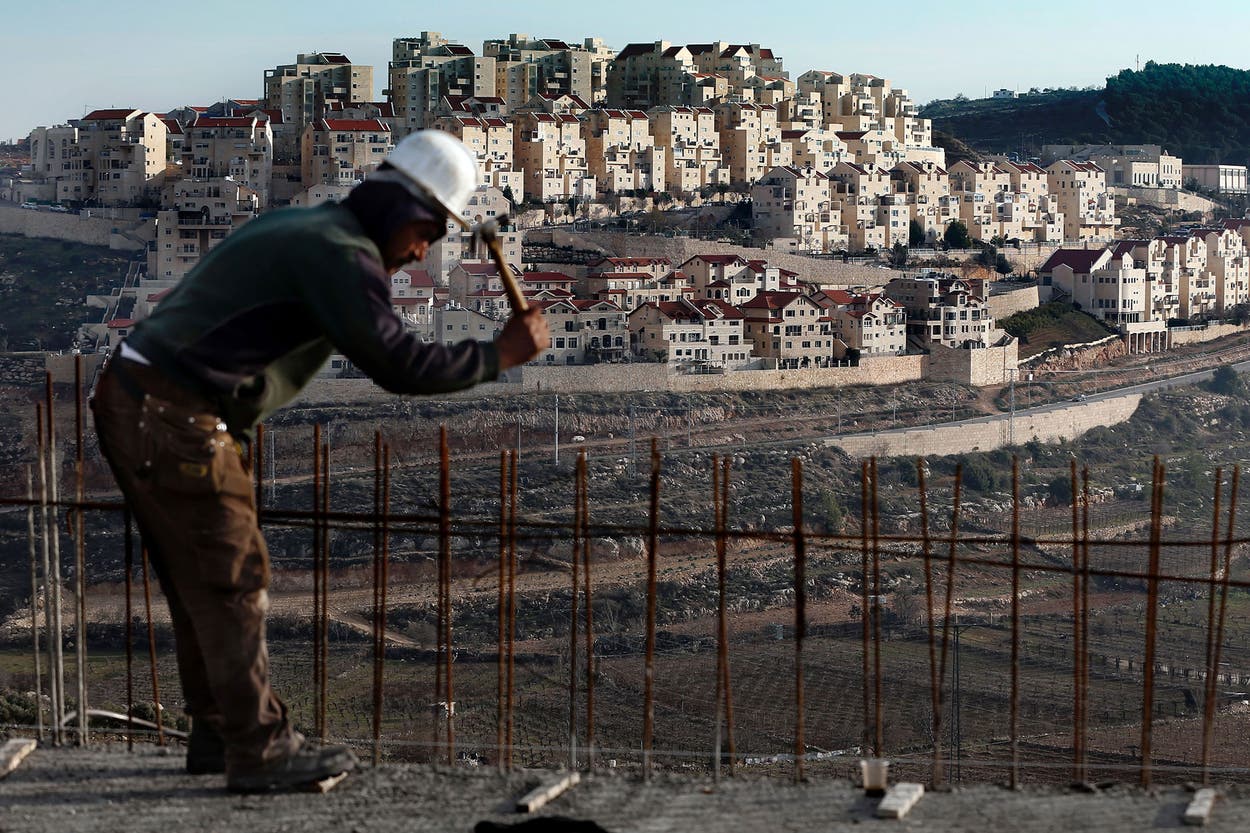
The construction industry epitomises the Histadrut’s position. This industry was crucial to state-building efforts, and had been highly unionised, with the Histadrut owning many key infrastructure firms. However, though it is still characterised by a relatively robust collective industrial relations system, with a relatively unified employer organisation, it has nonetheless undergone sweeping changes. The vast majority of Palestinians from the occupied territories entered this industry, which has also seen the privatisation of Histadrut enterprises from the 1980s onwards, the development of multiple layers of subcontracting, and the entry of foreign construction firms who bring their own workforce.[51] Palestinians laboured under poor conditions with many violations of basic rights; even though they are ostensibly covered by collective agreements and subject to Israel’s labour laws, enforcement is extremely poor and serious – often fatal – accidents are common.[52] Until very recently, the Histadrut made no attempt to assist these workers.
The rise of rights organisations was a further challenge to the Histadrut’s monopoly status. Such organisations tended not to question the basic decision of whether to allow Palestinians to work in the Israeli labour market (or how many should be granted this double-edged privilege), but they were vocal advocates of workers’ rights and have had a very significant impact on the lives of both Palestinian and migrant workers. They work on a case-by-case basis to assist these workers, as well as bringing class action suits and precedential cases to the courts, with far-reaching consequences. Kav Laoved, established in 1991, was and remains dominant. For example, in 2007 Kav Laoved was instrumental in achieving a High Court ruling that extended Israeli labour law to all Palestinians working for Israeli employers, regardless of where they were located, thus enabling Palestinians working for Israels in the West Bank settlements and in the West Bank industrial zones to demand employment terms according to Israeli standards, as well as enabling Israeli trade unions to operate in the occupied territories. As Preminger has argued, this ruling was itself enabled by and reflected the liberalisation of the Israeli justice system and the new logic of individualism and formal equality within the framework of human rights.[53][54]
The labour courts became inundated with Palestinian workers’ (individual) claims, and employers too were burdened by individual cases which could take months to clear the courts. The Histadrut moved to reassert its dominance and shore up collective labour relations in construction, in partnership with the employer organisation. In 2010, these social partners agreed on a mechanism for obligatory arbitration in the form of a joint committee (including both union and employer representatives, and anchored in a collective agreement) that could rule on individual cases, thus reasserting the centrality of the social partners in labour disputes, rights violations and grievances.[55] This was an important step in the Histadrut’s slow and belated transformation from a closed, ethnonationalist organisation to a more inclusive workers’ organisation, whose interests are understood to be more closely aligned with class than with nation.
It was only a small step: the Histadrut’s efforts for Palestinians in the construction industry do not include collective bargaining specifically on their behalf, nor do they include organising or attempts to actively recruit; moreover, the Histadrut continues to acquiesce in the oppressive structures of control that enable the exploitation of Palestinians and ensure an on-tap workforce for Israeli employers, including the occupation itself, the permit regime and the network of borders curtailing freedom of movement.[56][57] Crucially, despite the High Court ruling which makes it theoretically possible, the Histadrut does not actively organize Palestinian workers in the occupied territories or in the seam-line industrial zones.[58] Nonetheless, this step did increase Palestinian access to workers’ rights and brought them within trade union representative structures not only as passive beneficiaries of collective agreements, and was an important development in reducing inequalities between labour relations ‘insiders’ and ‘outsiders’.
The Histadrut, class politics and war crimes
The above overview suggests that the ‘economic inclusion’ of Palestinians and the concrete interests of various actors ‘on the ground’ often lead to greater inclusion in terms of social rights and representation, even if this was not the Histadrut’s intention.[59] However, this hesitant optimism is tempered by the recognition that Israel’s class structure remains hostage to an ethnonationalist agenda which leaves little space for interethnic class-based solidarity.
As Laron has argued, this class structure was entrenched by additional neoliberal reforms which were quietly implemented under cover of the fog and uncertainty created by the Second Intifada in the first years of the new millennium.[60] This period, with Benjamin Netanyahu as finance minister (2003-2005), saw further tax cuts for the wealthy and additional cuts to welfare benefits. Amongst other steps, the Histadrut was shorn of its pension funds, further undermining its financial base. As it had been in the 1980s, now too the US was crucial in pushing Israel in this direction by making aid conditional on these reforms as well as through the close personal links between key Israeli leaders and the US elite. Meanwhile, the private sector had grown, especially the financial and hi-tech sectors, and leaders from across the political spectrum believed their best chance of political power was to align themselves with private capital.
However, as leader of the Likud, Netanyahu lost the 2006 elections. Although some liberal centrists transferred their votes to the Likud, this was not sufficient to counter the loss of votes from the Likud’s traditional electoral base, which had mostly suffered from the neoliberal reforms. The peace process of the late 1990s had exacerbated this problem: linked as it was to the liberalisation and globalisation of Israel’s economy,[61] it once again benefited the bourgeois professionals and gave little to the Likud’s working class supporters, especially since the prospect of some kind of Palestinian autonomy appeared to be putting an end to cheap housing in the West Bank for Israelis, while improving relations with Israel’s neighbours led to factories being moved abroad and jobs in Israel lost.[62] Subsidies, meanwhile, were now focused on hi-tech and firms in the country’s centre, rather than the development towns of the periphery. Moreover, new centrist, liberal parties had arisen to capture some of the votes of the new professional class. This led to a change of strategy for the Likud.[63] Netanyahu’s comeback in 2009 was based on right-wing populism and a return to clientelist politics, with support from the ultra-Orthodox, the settlers and the working class. Government backing for the Israeli settlements was increased, and talk of a ‘two-state solution’ and future Palestinian state was reserved only to reassure foreign dignitaries. Loyal Netanyahu supporters were rewarded with state funds and largesse, distributed unequally according to legal mechanisms intentionally designed for this purpose, or simply distributed openly in a discriminatory way.[64]
The Histadrut was not an idle bystander: to reassert its position as a key sociopolitical actor and safeguard the interests of its most vocal and powerful members, it developed its links with the political elites, even forging alliances with the Likud. This collaboration between the Histadrut and the right began in the 2000s; in 2009, the Histadrut was central in herding the main political parties to an agreement that led to the formation of Likud-led coalition government.[65] In return for its support, some concessions to organised labour followed, including wage increases in the public sector, particularly benefiting the Histadrut’s powerful worker committees, and cementing their loyalties to the political right-wing. This Histadrut-Likud alliance, as Bondy has it, “effectively enabled [workers] to substitute [strike action] with political support”.[66] Despite a surge of strikes in the latter half of Ofer Eini’s leadership (2006-2014), the Histadrut’s dominant strategy remained political partnership, even at the cost of rifts with the ‘rank and file’.[67] The current chair, Arnon Bar-David, has reiterated this approach unequivocally, nurturing his ties with the political leadership of the Likud and its allies and filling key Histadrut positions with Likud supporters.[68]
Another sign of the Histadrut’s close association with the Likud is its initial refusal to act against the government’s judicial reforms, widely seen as ‘anti-democratic’:[69] Amongst other things, the proposed reforms were to limit the Supreme Court’s power to exercise judicial review and increase government control over judicial appointments, thereby shifting the balance of power from the judiciary to the executive. Though the Histadrut chair eventually called a strike to demand the government halt is reform agenda,[70] this was only after intense public pressure that effectively made the strike an expression of public discontent, as well as extensive pressure from employers. In other words, this was not a class-based collective action, and retribution for the Histadrut’s chutzpah in answering the liberal, centre-left public’s call came swiftly in the form of anti-union legislation as well as rising anger from its Likud-affiliated workers’ committees: the Histadrut, having pushed to the limits of its power, learned its lesson and made no additional attempts to halt the judicial overhaul.[71] From now on, the economic interests of its core constituencies would remain its overriding priority.
The events that followed the Hamas attack of 7th October 2023 can be said to have exposed the Histadrut’s ‘true face’, or more accurately, exposed its internal tensions and contradictions as well as its structural position in Israel’s political configuration.
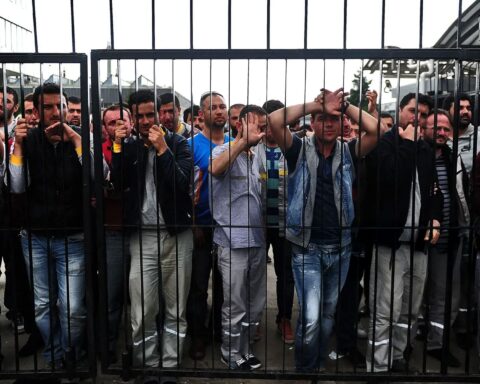
Then, on 7th October 2023, Hamas forces from the Gaza Strip brutally attacked Israeli towns and military posts in the south. Almost immediately, Israel closed the border with the West Bank and prevented the entry of Palestinian workers, ostensibly for security reasons.[72][73] Israeli politicians spoke in incendiary terms, some calling for nothing less than the elimination of Palestinians everywhere,[74] and the security services stepped up their trigger-happy operations against Palestinians ‘illegally’ in Israel.[75] With their livelihoods destroyed almost overnight, the Palestinian economy in the West Bank rapidly declined, leading to increasing poverty and hunger.[76] Yet the Histadrut remained silent. Faced with the suffering of workers it had represented, workers covered by its own collective agreements, the Histadrut said nothing, unable to even voice support for the return of at least some Palestinians to their workplaces inside Israel (not to mention the tens of thousands of Palestinians killed and many more desperately suffering in the Gaza Strip). It should be noted that the Histadrut was not alone: Koach Laovdim faces some of the same tensions: its members are from across the range of political allegiances, from religious settlers to working class to urban professional elites, as well as Palestinians from East Jerusalem. The National Histadrut, in keeping with its right-wing sympathies, took a clear anti-Palestinian stance, claiming that Israel needs to be completely weaned off Palestinian labour and advocating an increase in migrant labour to replace the Palestinian workers. Indeed, of Israel’s unions, only the small general union MAAN was quick to call for a return of the Palestinian workers to their Israeli workplaces, and to condemn the policy that sentenced Palestinian society to even greater levels of poverty.[77][78]
Conclusion
We began this article by raising the question of the Histadrut’s political status, as the main representative of organised labour in Israel today, in particular its ability to maintain an independent position vis-à-vis Israel’s ethnonational ‘other’ – the Palestinians. We suggested that Palestinian workers are caught between the ‘ethnonational imperative’ of exclusion and suppression (to maintain ethnonational dominance) and a capitalist or ‘neoliberal imperative’ of inclusion (to exploit labour). For Israel’s largest and most dominant workers’ organisation, the dynamic between these imperatives both opens up opportunities for greater inclusion of Palestinian workers, but also constrains what the Histadrut is able to do.
Its historical commitment to the ‘Zionist project’, the resultant institutional structures and modes of operating, as well as the class structure of Israeli society, all compel the Histadrut to maintain an ethnonational loyalty to the State of Israel, even at the expense of (some groups of) workers. As the current chairperson put it, referring to the Israeli hostages held by Hamas, ‘I am here in the name of the Israeli ethos, in the name of the shared destiny that turns us all from tribes into one nation. I am here to fight so that we will never leave anyone behind. The Jewish people do not leave anyone behind’.[79] This is an appeal to an ethnonational understanding of ‘nation’, intended to assure his audience that even in demanding greater efforts to free the hostages, and thus going against the government, he is still ‘one of us’: ethnonationalism trumps class solidarity. The Histadrut, then, is stuck between ethnonational populism, including ramped-up and increasingly violent Jewish settlement in the Palestinian occupied territories, and a political ‘centre-left’ which has long since abandoned any pretence that it supports labour-friendly economic policies. Thus, despite steps to alleviate the employment conditions of Palestinians, the Histadrut continues to acquiesce in the structures that undermine Palestinian rights, including basic human rights, most notably in its acceptance of the occupation and the structures that maintain Palestinians as a precarious and compliant workforce.[80]
Similarly, calls for the Histadrut to take a firmer stand against the war are from the same classes of people who supported the liberalisation policies and legislation that led to the decline in the power of organised labour, as well as increasing the inequalities between these classes and the Histadrut’s power base. This has squeezed the space available for organised labour to take a political role. The Histadrut is tied by the political inclinations of this power base, pushing its leadership to favour political compromise, reflected in its fear of speaking out against the exclusion of the Palestinians in October 2023.
The events that followed the Hamas attack of 7th October 2023 can be said to have exposed the Histadrut’s ‘true face’, or more accurately, exposed its internal tensions and contradictions as well as its structural position in Israel’s political configuration. The short-lived strike in support of the growing public demand that the government prioritise the return of the Israeli hostages held by Hamas was performative. It was an important step in positioning the Histadrut as a crucial political actor, one sensitive to the ‘will of the people’, but at the same time it masked the Histadrut’s support for the war effort: in its alliance with the Likud, in the concessions it accepted and the deals it made for the benefit of its base, the Histadrut provided the government with political legitimacy for Israel’s murderous rampage in the Gaza Strip while lightening the economic burden faced by the government of nearly two years of war.
This does not bode well for a progressive, inclusive labour movement able to counter the increasingly populist and strident Jewish ethnonationalism in Israel. Nonetheless, liberalisation has opened space for ‘effective citizenship’ in the gap between ‘exclusionary’ ethnonationalism and ‘inclusionary’ neoliberalism as the Histadrut manoeuvres between and responds to the interests of actors ‘on the ground’.[81] We should not dismiss these small changes to the strategic choices of the Histadrut in its very long and winding transformation from a nationalist organisation whose raison d’être is the Zionist settlement project, to an organisation more akin to the labour federations of Western Europe. With no end in sight to extreme ethnonationalism in Israeli politics, and no significant political bloc fighting the occupation, we suggest that if more profound improvements to the inclusion, representation and social rights of Palestinians within Israel’s industrial relations system are to come about, they will likely be the outcome of such incremental adjustments in response to class-based interests at ground level.
Jonathan Preminger is an academic at Cardiff Business School, Cardiff University, UK. Email: premingerj@cardiff.ac.uk.
Assaf S. Bondy is an academic at Bristol School of Management, University of Bristol, UK. Email: assaf.bondy@bristol.ac.uk.
[1] Assaf S. Bondy, Erez Maggor and Jonathan Preminger, “Understanding the Politics of Israel’s General Strike,” Jacobin, 9 September 2024, https://jacobin.com/2024/09/israel-general-strike-cease-fire.
[2] Idan Eretz, Gali Weinreb and Stav Livne, “Histadrut Mulls Extending Strike,” Globes, 2 September 2024, https://en.globes.co.il/en/article-Histadrut-mulls-extending-strike-1001488190.
[3] Dearbail Jordan and Alice Cuddy, “Tens of Thousands Rally in Israel Calling for Hostage Release Deal,” BBC, 1 September 2024, https://www.bbc.co.uk/news/articles/cze5x793569o.
[4] Sky News, “Israelis Set to Strike – As Around 500,000 Protest after Hostages Found ‘Murdered’ in ‘Cold Blood’,” 2 September 2024, https://news.sky.com/story/israelis-set-to-strike-as-around-500-000-protest-after-hostages-found-dead-13208236.
[5] S. Shafir, “Court Instructs Histadrut to End Strike,” Globes, 2 September 2024, https://en.globes.co.il/en/article-court-instructs-histadrut-to-end-strike-1001488194.
[6] Lee H. Adler, Maite Tapia and Lowell Turner, eds., Mobilizing against Inequality: Unions, Immigrant Workers, and the Crisis of Capitalism (Ithaca: ILR Press, 2014); Alexandre Afonso, Samir Negash and Emily Wolff, “Closure, Equality or Organisation: Trade Union Responses to EU Labour Migration,” Journal of European Social Policy 30, no. 5 (2020): 528–42; Jane Hardy, Line Eldring and Thorsten Schulten, “Trade Union Responses to Migrant Workers from the ‘New Europe’: A Three Sector Comparison in the UK, Norway and Germany,” European Journal of Industrial Relations 18, no. 4 (2012): 347–63; Rinus Penninx and Judith Roosblad, eds., Trade Unions, Immigration and Immigrants in Europe, 1960–1993 (Oxford: Berghahn Books, 2000); Stefania Marino, Judith Roosblad and Rinus Penninx, eds., Trade Unions and Migrant Workers: New Contexts and Challenges in Europe (Cheltenham: Edward Elgar/ILO, 2017).
[7] Richard Hyman, “The Very Idea of Democracy at Work,” Transfer: European Review of Labour and Research 22, no. 1 (2016): 11–24; Barbara J. Fick, “Not Just Collective Bargaining: The Role of Trade Unions in Creating and Maintaining a Democratic Society,” WorkingUSA 12, no. 2 (2009): 249–65; Lucio Baccaro, Chiara Benassi and Guglielmo Meardi, “Theoretical and Empirical Links between Trade Unions and Democracy,” Economic and Industrial Democracy 40, no. 1 (2019): 3–19; Michael Bratton and Nicolas van de Walle, Democratic Experiments in Africa: Regime Transitions in Comparative Perspective (Cambridge: Cambridge University Press, 2012); Dina Bishara, “Legacy Trade Unions as Brokers of Democratization? Lessons from Tunisia,” Comparative Politics 52, no. 2 (2020): 173–95.
[8] Heather Connolly, Stefania Marino and Miguel Martínez Lucio, The Politics of Social Inclusion and Labor Representation: Immigrants and Trade Unions in the European Context (Ithaca: ILR Press, 2019); Edna Bonacich, “A Theory of Ethnic Antagonism: The Split Labor Market,” American Sociological Review 37, no. 5 (1972): 547–59.
[9] Dina Bishara, “Labor Movements in Tunisia and Egypt,” SWP Comments 1 (2014): 1–8; Chris Howell, Trade Unions and the State: The Construction of Industrial Relations Institutions in Britain, 1890–2000 (Princeton: Princeton University Press, 2005); Bratton and van de Walle, Democratic Experiments in Africa.
[10] Guglielmo Meardi, Antonio Martín and Mariona Lozano Riera, “Constructing Uncertainty: Unions and Migrant Labour in Construction in Spain and the UK,” Journal of Industrial Relations 54, no. 1 (2012): 5–21; Lisa Berntsen and Nathan Lillie, “Hyper-Mobile Migrant Workers and Dutch Trade Union Representation Strategies at the Eemshaven Construction Sites,” Economic and Industrial Democracy 37, no. 1 (2016): 171–87.
[11] For example, see Nathan Lillie and Ian Greer, “Industrial Relations, Migration, and Neoliberal Politics: The Case of the European Construction Sector,” Politics & Society 35, no. 4 (2007): 551–81.
[12] Jonathan Preminger and Assaf S. Bondy, “Conflicting Imperatives? Ethnonationalism and Neoliberalism in Industrial Relations,” ILR Review 76, no. 4 (2023): 646–73.
[13] For example, see Moshe Semyonov and Noah Lewin-Epstein, Hewers of Wood and Drawers of Water: Noncitizen Arabs in the Israeli Labor Market (Ithaca: ILR Press, 1987); Juval Portugali, Implicate Relations: Society and Space in the Israeli-Palestinian Conflict (Dordrecht: Kluwer, 1993); Amalia Sa’ar, “Palestinian Women in the Israeli Workforce and the Idea of Economic Citizenship,” Economic Sociology 16, no. 2 (2015): 14–20; Guy Mundlak, “Israeli Labour Law as Economic Warfare,” Industrial Law Journal 20, no. 1 (1999): 13–44; Leila Farsakh, Palestinian Labour Migration to Israel: Labour, Land and Occupation (Abingdon: Routledge, 2005); Avram S. Bornstein, “Borders and the Utility of Violence: State Effects on the ‘Superexploitation’ of West Bank Palestinians,” Critique of Anthropology 22, no. 2 (2002): 201–20; Andreas Hackl, “Occupied Labour: Dispossession through Incorporation among Palestinian Workers in Israel,” Settler Colonial Studies 13, no. 1 (2022): 96–114; Nabil Khattab and Sami Miaari, eds., Palestinians in the Israeli Labor Market (New York: Palgrave Macmillan, 2013); Alaa Tartir, Tariq Dana and Timothy Seidel, eds., Political Economy of Palestine: Critical, Interdisciplinary, and Decolonial Perspectives (Cham: Palgrave Macmillan, 2021).
[14] It is fair to argue that the ‘Israeli’ labour market cannot clearly be differentiated from its ‘Palestinian’ counterpart, especially since the economies of the two supposedly separate entities are so intricately entwined, but this discussion is beyond the remit of this article.
[15] Michael Shalev, Labour and the Political Economy in Israel (Oxford: Oxford University Press, 1992); Lev Luis Grinberg, The Histadrut Above All [Hebrew] (Jerusalem: Nevo, 1993).
[16] Gershon Shafir, Land, Labor and the Origins of the Israeli-Palestinian Conflict, 1882–1914 (Cambridge: Cambridge University Press, 1989).
[17] For a brief overview, see Jonathan Preminger, Labor in Israel: Beyond Nationalism and Neoliberalism (Ithaca: ILR Press, 2018), 1–7.
[18] David De Vries, “Drawing the Repertoire of Collective Action: Labour Zionism and Strikes in 1920s Palestine,” Middle Eastern Studies 38, no. 3 (2002): 93–122; Michal Frenkel, Yehouda Shenhav and Hanna Herzog, “The Cultural Wellsprings of Israeli Capitalism: The Impact of Private Capital and Industry on the Shaping of the Dominant Zionist Ideology,” in The New Israel: Peacemaking and Liberalization, ed. Gershon Shafir and Yoav Peled (Boulder: Westview, 2000), 43–70.
[19] Deborah S. Bernstein, Constructing Boundaries: Jewish and Arab Workers in Mandatory Palestine (Albany: SUNY Press, 2000); Zachary Lockman, Comrades and Enemies: Arab and Jewish Workers in Palestine, 1906–1948 (Berkeley: University of California Press, 1996).
[20] The Histadrut’s nearest rival, the National Histadrut, established in 1934 by workers loyal to Ze’ev Jabotinsky’s minority right-wing Revisionist party (forerunner of today’s Likud party), had a similar function in organising Jewish workers and aspiring to an economy based on ‘Hebrew labour’ alone, though it did not have the economic empire that the Histadrut enjoyed.
[21] Benny Morris, The Birth of the Palestinian Refugee Problem, 1947–1949 (Cambridge: Cambridge University Press, 1987).
[22] Shalev, Labour and the Political Economy in Israel.
[23] A. Harel, Crisis in the Labour Movement [Hebrew] (Tel Aviv: Am Oved, 2004); Lev Luis Grinberg, “A Historical Slip of the Tongue, or What Can the Arab-Jewish Transportation Strike Teach Us about the Israeli-Palestinian Conflict?” International Journal of Middle East Studies 35, no. 3 (2003): 371–91.
[24] J. Landau, “The Arabs and the Histadrut,” in Labor and Society in Israel, ed. I. Avrech and D. Giladi (Tel Aviv: Tel Aviv University and Histadrut, 1973), 24–38; Michael Shalev, “Jewish Organised Labour and the Palestinians: A Study of State/Society Relations in Israel,” in The Israeli State and Society: Boundaries and Frontiers, ed. Baruch Kimmerling (Albany: State University of New York Press, 1989), 93–133, 109.
[25] Israel’s Palestinian citizens were accepted as members in the separate unions under Histadrut auspices in 1953, and as Histadrut members in 1959, but received full voting rights only in 1965. Today, Palestinian citizens are covered by collective agreements if they work in sectors with such agreements (mostly the public sector, broadly understood, and some sectors that have undergone privatization), as well as traditional industries.
[26] Shalev, Labour and the Political Economy in Israel.
[27] Excluding those sectors Israel considered ‘sensitive’ from a security perspective.
[28] Farsakh, Palestinian Labour Migration to Israel; Arie Arnon, “Israeli Policy towards the Occupied Palestinian Territories: The Economic Dimension, 1967–2007,” Middle East Journal 61, no. 4 (2007): 573–95.
[29] Shalev, Labour and the Political Economy in Israel.
[30] Lev Luis Grinberg, Split Corporatism in Israel (Albany: State University of New York Press, 1991).
[31] For example, see Zeev Rosenhek, “The Political Dynamics of a Segmented Labour Market: Palestinian Citizens, Palestinians from the Occupied Territories and Migrant Workers in Israel,” Acta Sociologica 46, no. 3 (2003): 231–49.
[32] Adriana Kemp and Rebeca Raijman, Foreign Workers: The Political Economy of Migrant Labour in Israel [Hebrew] (Jerusalem: Hakibbutz Hameuchad, 2008); CIMI (Center for International Migration and Integration), Call Centre for Foreign Workers under Bilateral Agreements – 2022 [Hebrew] (2023), https://www.cimi.org.il/_files/ugd/5d35de_6bf7ae4202cc4218a51a1ea36a01796b.pdf.
[33] Migrants in construction were mainly from Eastern Europe, Turkey and China, in agriculture from Thailand, and in the care sector from the Philippines, India and Nepal.
[34] Wifag Adnan and Haggay Etkes, The Economic Incidence of the Migration Surplus: Evidence from Border Regulations (2023), https://nyuad.nyu.edu/content/dam/nyuad/faculty/social-science/wifag-adnan/economic-incidence-migration.pdf.
[35] Gershon Shafir and Yoav Peled, eds., The New Israel: Peacemaking and Liberalization (Boulder: Westview, 2000).
[36] Lev Luis Grinberg and Gershon Shafir, “Economic Liberalization and the Breakup of the Histadrut’s Domain,” in The New Israel: Peacemaking and Liberalization, ed. Gershon Shafir and Yoav Peled (Boulder: Westview, 2000), 103–27; A. Maor, “Israeli Governments as Leading Policy of Breaking Labour Organisations and Using Practices of Exploitative and Harmful Employment,” in Precarious Employment: Systematic Exclusion and Exploitation in the Labour Market [Hebrew], ed. D. Mishori and A. Maor (Ramat Gan: Social-Economic Academy and Achva Press, 2012), 45–60.
[37] See Assaf S. Bondy and Jonathan Preminger, “Collective Labour Relations and Juridification: A Marriage Proposal,” Economic and Industrial Democracy 43, no. 3 (2022): 1260–80.
[38] Guy Laron, “Israel’s Bonaparte,” Catalyst 8, no. 1 (2024), https://catalyst-journal.com/2024/06/israels-bonaparte.
[39] Michael Shalev and Lev Luis Grinberg, Histadrut-Government Relations and the Transition from a Likud to a National Unity Government: Continuity and Change in Israel’s Economic Crises (Tel Aviv: Pinhas Sapir Center for Development, Tel Aviv University, 1989).
[40] Shafir and Peled, The New Israel.
[41] Maor, “Israeli Governments as Leading Policy of Breaking Labour Organisations.”
[42] Grinberg and Shafir, “Economic Liberalization and the Breakup of the Histadrut’s Domain.”
[43] Preminger, Labor in Israel, 37–92, 135–46.
[44] Basic Laws have a special status in Israel’s lawbooks, with additional constraints determining how they may be amended. Israel has no written constitution, and the Basic Laws collectively function as a constitution of sorts.
[45] Menachem Mautner, The Decline of Formalism and the Rise of Values in Israeli Law [Hebrew] (Tel Aviv: Maagalei Daat, 1993); Ran Hirschl, “The ‘Constitutional Revolution’ and the Emergence of a New Economic Order in Israel,” Israel Studies 2, no. 1 (1997): 136–55; Aeyal Gross, “The Israeli Constitution: A Tool for Distributive Justice or a Tool That Prevents It?” [Hebrew], in Distributive Justice in Israel, ed. Menachem Mautner (Tel Aviv: Ramot, 2000), 79–96.
[46] Guy Mundlak, Fading Corporatism: Israel’s Labor Law and Industrial Relations in Transition (Ithaca: ILR Press, 2007).
[47] Juridification is ‘the process of establishing mandatory legal norms that substitute for extra-legal regulation of social or economic relationships’ (Mundlak, Fading Corporatism, 154).
[48] Tali Kristal, Yinon Cohen and Guy Mundlak, The Union and the Rise in Economic Inequality in Israel, 1970–2003 [Hebrew] (Jerusalem: Van Leer Institute, 2006); Tali Kristal, “Slicing the Pie: State Policy, Class Organization, Class Integration, and Labor’s Share of Israeli National Income,” Social Problems 60, no. 1 (2013): 100–27.
[49] Itzhak Harpaz, “The State of Trade Unionism in Israel,” in Trade Union Revitalisation: Trends and Prospects in 34 Countries, ed. Craig Phelan (Bern: Peter Lang, 2007), 445–60, 454.
[50] Where Palestinians are employed via a ‘team leader’ who is often known to them and arranges their work and transport, liaises with the employer, and handles their wages, while taking a cut.
[51] Assaf S. Bondy, “The Rise and Fall of Sectoral Collective Bargaining: The Emergence of a Hybrid Industrial Relations in Israel’s Private Sector” [Hebrew], Labor, Society and Law 16 (2020): 79–102; Farsakh, Palestinian Labour Migration to Israel.
[52] Bondy and Preminger, “Collective Labour Relations and Juridification”; Kav LaOved, 2018: Year Summary in Construction Sector Work Accidents [Hebrew], 2019, https://www.kavlaoved.org.il.
[53] Jonathan Preminger, “Effective Citizenship in the Cracks of Neocorporatism,” Citizenship Studies 2, no. 1 (2017): 85–99.
[54] See also Bondy and Preminger, “Collective Labour Relations and Juridification.”
[55] Bondy and Preminger, “Collective Labour Relations and Juridification.”
[56] Yael Berda, Living Emergency: Israel’s Permit Regime in the Occupied West Bank (Stanford: Stanford University Press, 2017); Jonathan Preminger, “Internal Borders and the Shaping of Noncitizen Workers in the Context of Ethnonational and Territorial Conflict,” Work, Employment and Society, online first (2025), https://journals.sagepub.com/doi/10.1177/09500170251317996.
[57] The permit system was established in 1991, ostensibly as a security measure in light of the first intifada.
[58] These industrial zones, some of which were set up after the Oslo Accords were signed, are located between ‘Israel proper’ and territories supposedly intended for the future Palestinian state. They employ mostly Palestinian labour while managers and owners are Israeli.
[59] See Preminger, “Effective Citizenship in the Cracks of Neocorporatism”; Bondy and Preminger, “Collective Labour Relations and Juridification.”
[60] Laron, “Israel’s Bonaparte.”
[61] Shafir and Peled, The New Israel.
[62] Preminger, Labor in Israel, 161–65.
[63] Laron, “Israel’s Bonaparte.”
[64] For a discussion of these political changes, see Laron, “Israel’s Bonaparte.”
[65] Assaf S. Bondy and Erez Maggor, “Balancing the Scales: Labour Incorporation and the Politics of Growth Model Transformation,” New Political Economy 29, no. 1 (2024): 22–41.
[66] Assaf S. Bondy, “Workers for Democracy? Trade Unions and the Struggle against Democratic Backsliding,” Democratization, online first (2025), 8, https://doi.org/10.1080/13510347.2025.2507359.
[67] Jonathan Preminger, “Activists Face Bureaucrats: The Failure of the Israeli Social Workers’ Campaign,” Industrial Relations Journal 44, no. 5–6 (2013): 462–78; Jonathan Preminger, “Creating a Multilayered Representational ‘Package’ for Subcontracted Workers: The Case of Cleaners at Ben-Gurion University,” Industrial Relations Journal 49, no. 1 (2018): 34–49.
[68] Bondy, “Workers for Democracy?”
[69] N. Shafir, “Tens of Thousands in Jerusalem: Protest Strike and Demonstrations against the Judicial Reforms” [Hebrew], Globes, 13 February 2023, https://www.globes.co.il/news/article.aspx?did=1001438155.
[70] S. Gorodisky, “Take-offs Suspended, the Histadrut Declares General Strike” [Hebrew], Israel Hayom, 27 March 2023, https://www.israelhayom.co.il/business/article/13875055.
[71] See Bondy, “Workers for Democracy?”
[72] Bank of Israel, Annual Report – 2023 [Hebrew] (Jerusalem: Bank of Israel, 2024), https://www.boi.org.il/publications/regularpublications/boi-reports/d2023/.
[73] A few thousand were subsequently permitted to enter for ‘high priority’ projects, while Palestinians were permitted to continue to work in the Israeli settlements in the occupied West Bank and in the seam-line industrial zones.
[74] A. Raz and Assaf S. Bondy, Lexicon of Brutality [Hebrew] (Pardes, 2025).
[75] Tomer Ganon, “Between Income and the Fear of Reprisal: The Arab Workers’ Trap” [Hebrew], Calcalist, 16 October 2023, https://www.calcalist.co.il/local_news/article/bkxdz5k11t.
[76] Y. Yehoshua, “Some 40,000 Illegals Entering via Holes in the Fence: ‘There’s No Oversight, It Would Be Better Their Entry Was Regulated’” [Hebrew], Ynet, 8 July 2024, https://www.ynet.co.il/news/article/yokra13991716.
[77] Assaf Adiv, “Instead of Showy Arrests, Let Palestinian Workers Return to Construction,” MAAN, 2 December 2024, https://wac-maan.org.il/palestinian-workers-33/.
[78] MAAN has only a few hundred members and is historically associated with Daam, a very small far-left, anti-Zionist party, so that these tensions do not impact it.
[79] Histadrut, “Arnon Bar-David: General Strike Tomorrow to Bring Home the Hostages,” press release, 2024, https://global.histadrut.org.il/news/histadrut-calls-general-strike-tomorrow-to-bring-home-the-hostages/.
[80] Berda, Living Emergency; Preminger, “Internal Borders.”
[81] Preminger, “Effective Citizenship in the Cracks of Neocorporatism.”
*This article by Jonathan Preminger and Assaf S. Bondy was originally published in German in PROKLA. A Turkish translation by Ulaş Taştekin is also available on Textum.